
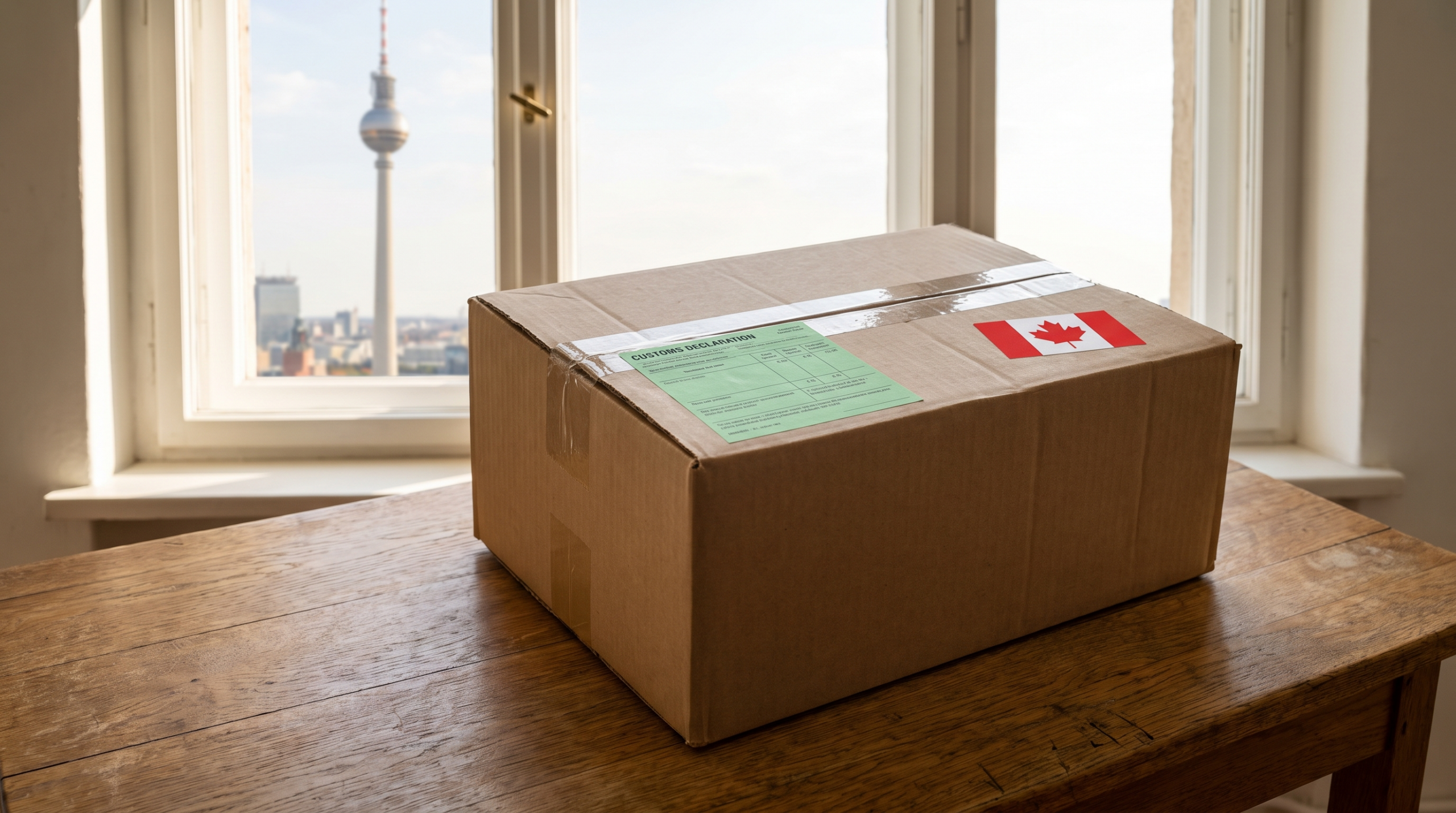
Germany is Europe’s largest economy and one of the continent’s most dynamic online markets: more than 60 million active shoppers, strong demand for North American products (outdoor gear, maple products, fashion, supplements, specialty items), and a delivery logistics system that ranks among the most reliable in the world. For a Canadian small or medium-sized business, ship to Germany It therefore represents a real opportunity… provided you understand the new customs rules for 2026.
Because everything changed this summer. Since the 1ster In July 2026, the European Union abolished the duty-free exemption for packages valued at less than €150, imposed a flat fee of €3 per item, and required more detailed customs data. As a direct result, Canada Post has suspended the delivery of packages to Germany, forcing many shippers to completely rethink their operations.
This guide explains, with supporting statistics, how to ship a package to Germany from Canada in 2026: taxes, required documents, available carriers, delivery times, estimated costs, and common mistakes to avoid.
What Changed on the 1ster July 2026 for packages shipped to Germany
Three new European regulations directly affect your shipments to Germany:
- End of the €150 deductible : Previously, a package valued at less than €150 was exempt from customs duties (only VAT applied). That threshold no longer exists.
- Flat fee of €3 per item : Each item (each line on the customs declaration) declared as low-value is subject to a flat fee of €3, unless it is exempt under a trade agreement such as the CETA.
- Data at the item level : A detailed description, a 6-digit HS code (minimum), unit value, country of origin, and the recipient’s full contact information (email and phone number) are now required for electronic customs clearance.
A fourth measure is coming this fall: the European Commission has announced customs processing fees for shipments starting in November 2026, which will be added to the €3 fee. You should therefore expect an additional increase in the cost of delivering your low-value packages.
Canada Post Suspends Service to Germany: What Options Remain?
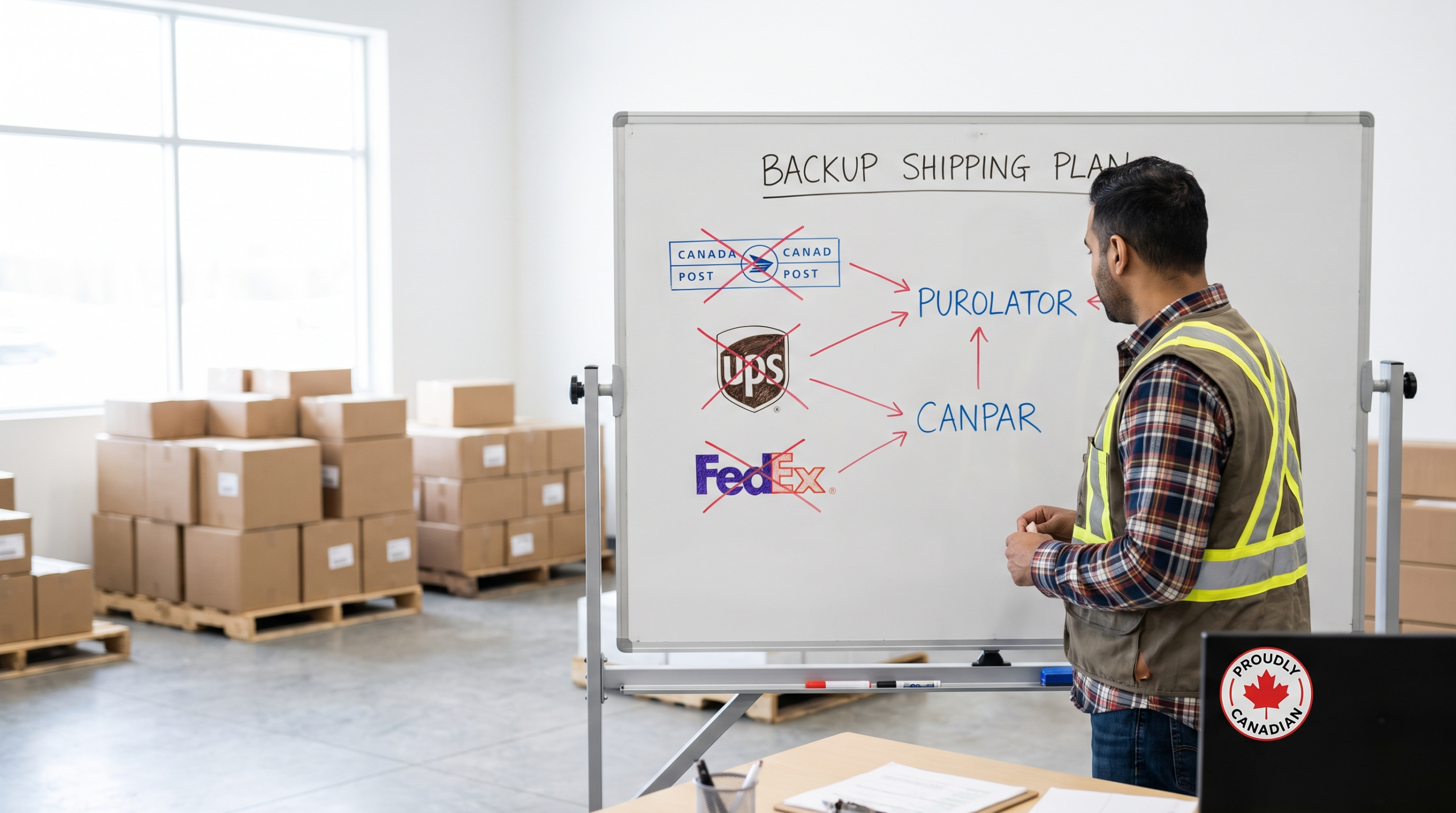
On July 7, 2026, Canada Post announced that it was suspending, until further notice, the acceptance of packages bound for nine EU countries, including Germany, Austria, Belgium, France, and Denmark. The reason: the postal services in those countries were not yet able to collect the new duties and transmit the required data. Shipments to Spain, Italy, the Netherlands, or Poland are still possible, but not to Germany.
Specifically, to ship to Germany from Canada today, you must go through a private express carrier : DHL Express, FedEx, UPS, or Purolator International (which uses the UPS network). These carriers have their own customs brokerage services, collect duties and sales tax, and deliver within 2 to 5 business days.
Duties, VAT, and fees: How much does it really cost to ship a package to Germany?
Here are the components of the landing cost for a shipment from Canada to Germany in 2026 (estimated figures):
| Cost center | Amount for 2026 | Notes |
|---|---|---|
| German VAT (Einfuhrumsatzsteuer) | 19 % (7 % for books, food, and certain medical products) | Calculated based on the property's value + shipping + insurance + fees |
| EU Flat-Rate Duty | €3 per item | Since the 1ster July 2026; eligible for exemption under the CETA with proof of origin |
| Standard Customs Duties | 0 % to 12 %, depending on the HS code | 0 % for most products of Canadian origin (CETA); textiles and auto parts are often taxed without proof of origin |
| Brokerage Fees / Cash Advances | €12 to €25 per shipment | Billed by DHL, UPS, or FedEx to the recipient under DAP terms, or to you under DDP terms |
| EU Customs Processing Fees | Coming Soon (November 2026) | Final amount to be confirmed by the European Commission |
Example: An 80 $ CA sweater (approximately €54) manufactured in Canada and shipped on a DAP basis. With CETA proof of origin: €0 in duties, a potential €3 flat-rate duty that may be exempt, VAT of approximately €12 on the value plus shipping, and €15 in brokerage fees. The recipient therefore pays approximately 27 € upon delivery. Without proof of origin, a duty of 12 % is added to the textiles, amounting to approximately 6.50 € more.
CETA: Your Best Ally in Reducing Tariffs
The Comprehensive Economic and Trade Agreement (CETA) between Canada and the EU eliminates tariffs on 98 % tariff lines for products of Canadian origin. To take advantage of this:
- The product must be manufactured or substantially processed in Canada (an item imported from China and simply re-shipped is not eligible).
- For shipments valued at less than €6,000, simply enter the Declaration of Origin on the commercial invoice, along with your business number.
- For amounts over €6,000, you must be registered as an exporter (business number and REX program).
Please note: CETA reduces or eliminates duties, but never the 19 % VAT. This tax applies to all commercial shipments, regardless of their value.
Comparison of Carriers from Canada to Germany in 2026
Estimated rates for a 2-kg package measuring 30 × 20 × 15 cm, shipped from Montreal to Berlin, at retail rates (rates negotiated through Expert Shipping are significantly lower):
| Carrier / Service | Estimated timeframe | Approximate retail price. | Strengths |
|---|---|---|---|
| DHL Express Worldwide | 2 to 3 business days | 140 $ to 180 $ | In-house network in Germany, fastest customs clearance |
| FedEx International Priority | 2 to 3 business days | 130 $ to 175 $ | Early morning delivery available, reliable tracking |
| FedEx International Economy | 4 to 6 business days | 95 $ to 130 $ | Cost-Time Trade-off |
| UPS Worldwide Expedited | 3 to 5 business days | 100 $ to 140 $ | Simple DDP Option, Ideal for E-commerce |
| Purolator International | 3 to 6 business days | 100 $ to 145 $ | Pickup available across Canada; billing in Canadian dollars |
| Canada Post | Suspended | — | No service to Germany since July 2026 |
These amounts do not include fuel surcharges (approximately 25 % to 30 % for international shipments in 2026) or duties and taxes. They vary depending on the commercial agreement, the destination region, and the volumetric weight.
Documents and Steps for a Smooth Customs Clearance Process
1. The commercial invoice, in English or German
It must include: complete contact information for the sender and recipient (email and phone number required), a detailed description of each item, a minimum 6-digit HS code (ideally 8 digits according to the TARIC nomenclature), quantity, unit value in currency, country of origin, weight, and Incoterm (DAP or DDP). Include the CETA declaration of origin if your products are eligible.
2. The recipient's EORI number and VAT ID (B2B)
If you're selling to a German company, ask for its EORI number and its intra-EU VAT number. Without this information, the package may be held up for several days at the sorting center in Leipzig or Frankfurt.
3. Choose between DAP and DDP
In DAP, your German customer pays duties, VAT, and brokerage fees upon delivery. It’s simple for you, but package refusals are common when the fees come as a surprise to the buyer. In DDP, you pay everything up front and list an «all-inclusive» price: conversion rates go up, but you must either charge German VAT, use the IOSS portal (for goods priced at €150 or less), or work with a tax representative. For consistent volume, DDP has become the standard in e-commerce.
4. Check for prohibited or restricted items
Germany strictly enforces European regulations: meat and dairy products are prohibited, there are restrictions on seeds and plants, CE marking is mandatory for electronics and toys, REACH regulations for cosmetics, and a total ban on certain items (automatic knives, counterfeit goods, and unapproved nicotine products). Lithium batteries are accepted only if they are in compliant packaging and have been declared.
Six Ways to Reduce the Cost of Shipping to Germany
- Combine orders : The €3 fee applies per item, but the shipping charges are per shipment. It’s best to combine two orders from the same customer into a single package.
- Document your Canadian ancestry : A simple CETA declaration on the invoice can save between 4 % and 12 % in duties.
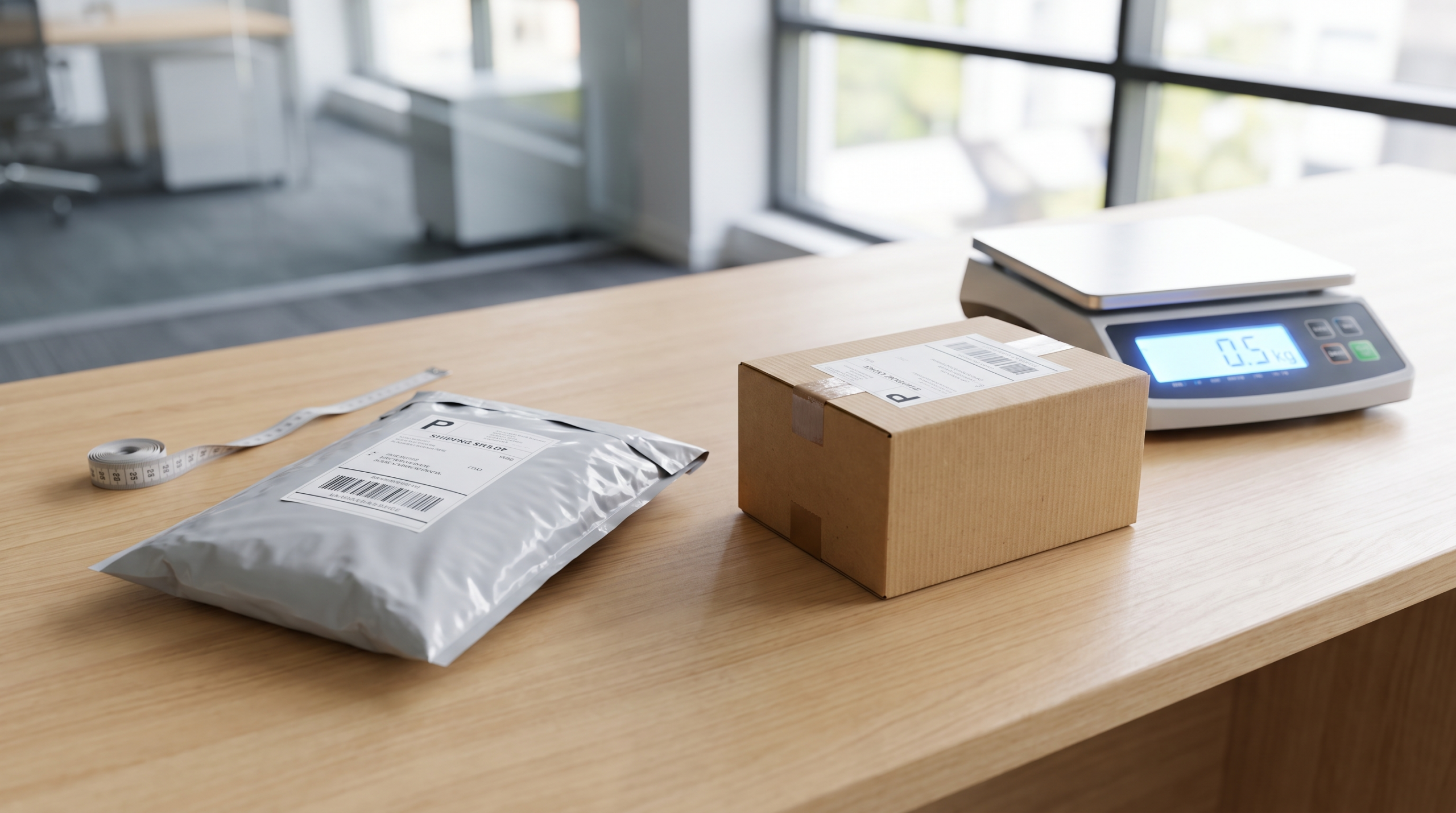
- Optimize the volume : Internationally, the volumetric conversion factor is 5,000 cm³/kg. A box that is too large is billed at a rate well above its actual weight.
- Compare DHL, FedEx, UPS, and Purolator for every shipment : Depending on the weight and the area, the difference often exceeds 30 %.
- Use a reseller with negotiated rates as an Expert Shipping member to access volume discounts with no minimum commitment.
- Display the charges at the register : An informed customer rarely refuses a package, which saves you from costly return shipping fees (often 60 % to 100 % of the one-way shipping rate).
Conclusion: Germany remains accessible, but no longer with just a stamp
Shipping to Germany from Canada in 2026 requires more attention to detail than before: 19 % VAT, a flat fee of 3 €, complete product information, and, for now, no postal service. On the other hand, the CETA eliminates most tariffs on Canadian products, and express carriers deliver to Berlin, Munich, or Hamburg in less than a week.
At Shipping Store, we compare DHL, FedEx, UPS, and Purolator for you in a single quote, prepare your customs documents, and advise you on DDP and the CETA. Get a quote for your next shipment to Germany and ship to Europe without any unpleasant surprises.
The rates, fees, and transit times mentioned in this article are for informational purposes only and may vary depending on the commercial agreement, the service selected, the volumetric weight, applicable surcharges, and the declared value. Always check the carrier’s terms and conditions before shipping.

 French
  English
  Spanish