
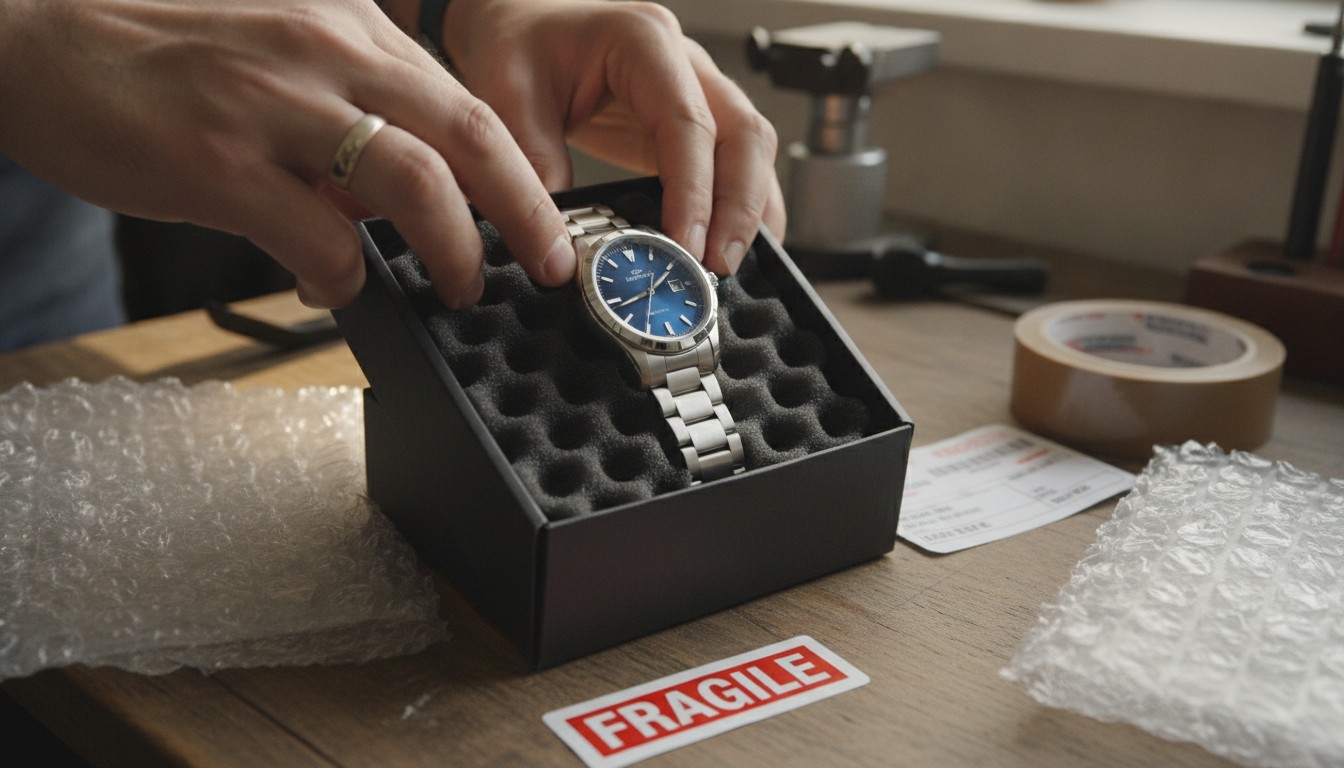
A watch inherited from your grandfather, a necklace sold to a customer in Vancouver, a painting destined for a collector in Toronto: ship valuables is nothing like a regular shipment. A lost standard package is reimbursed within a few weeks; a piece of jewelry worth 3,000 $ that isn’t properly insured could result in a total loss.
The challenge? Each carrier has its own liability limits, exclusions, and packaging requirements for high-value items. And certain categories, such as jewelry or precious metals, are completely excluded from basic coverage by many carriers.
Here’s how to ship valuable items to Canada in 2026 without putting your assets or your profit margin at risk. The amounts listed are for reference only and vary depending on the agreement and service you choose.
What is a «valuable item» for a carrier?
Carriers do not define value solely in dollars. They generally classify the following as «valuable items» or «items with limited liability»:
- Jewelry, Watches, and Gemstones : often excluded above a very low threshold (sometimes 500 to 1,000 $), even if a value is declared; ;
- Works of Art and Collectibles : paintings, sculptures, collectible cards, antique instruments; ;
- Precious Metals and Currencies : bullion, coins, cash — often prohibited from shipment; ;
- High-end electronics : computers, cameras, game consoles; ;
- Irreplaceable documents : notarial deeds, handwritten documents, certificates.
Before shipping any items, check two separate lists with your carrier: the Prohibited Items (rejected within the network) and the Limited Liability Companies (Accepted, but compensation is capped even if the carrier is at fault.).
Declared Value: What Each Carrier Actually Covers
«Declared value» is not insurance in the strict sense: it is the liability limit you purchase from the carrier. Here are some indicative figures for 2026:
| Carrier | Basic Coverage | Special Features of Valuables |
|---|---|---|
| Canada Post | Up to 100 $ (inclusive), depending on the service | Additional coverage may be available, but jewelry and precious metals are subject to strict restrictions |
| Purolator | ~100 $ included | Additional declared value subject to a fee; integrated network that limits transfers between multiple parties |
| UPS | 100 $ included | Declared value up to high limits, but jewelry and works of art are capped at much lower amounts |
| FedEx | 100 $ included | A cap of approximately 1,000 $ across several «limited liability» categories (jewelry, art, fur) |
The classic pitfall: paying a declared value of 5,000 $ for a bracelet when the terms and conditions cap compensation for jewelry at 1,000 $. Paying the extra amount does not waive the exclusion—always read the list of items with limited liability before paying.
Third-Party Insurance: The Solution for High-Value Items
Beyond the carriers' caps, a third-party shipping insurance takes over. It can be purchased from specialized insurers or through your shipping provider, and generally covers:
- items worth tens of thousands of dollars per package; ;
- categories excluded by carriers (jewelry, art, collectibles) subject to packaging requirements; ;
- loss, theft, and damage, with premiums often ranging from 1 to 3 % of the insured value (for reference purposes only).
For a shipment of 4,000 $, a premium of 40 to 120 $ is a reasonable cost compared to the risk of total loss. Request a written valuation (invoice, valuation certificate) before shipping: this is the key document for any claim.
Packaging: The double box is not optional
For valuable items, most insurers require reinforced packaging; otherwise, the claim may be denied:
- Double box : the item in a first padded box, placed inside a second box with 5 cm of padding on all sides; ;
- Discreet packaging : No mention of «jewelry,» «gold,» or luxury brand logos on the outside—discretion reduces the risk of theft; ;
- Reinforced strap and H-shaped clasp on all openings; ;
- Dated photos of the item and its packaging at every stage: your proof in the event of a dispute.
Signature, Tracking, and Security Options
Never leave a valuable item on a front porch. Here are three security measures you should always take:
- Signature Required Upon Delivery (6 to 20 $, depending on the carrier; sometimes included): This documents personal delivery; ;
- Real-time tracking with alerts: you can take action as soon as a package is delayed for an unusually long time; ;
- Delivery to a pickup location : For recipients who are away during the day, a secure drop-off point is better than leaving a package exposed to theft.
For international shipments, include an accurate customs declaration: undervaluing a piece of jewelry to reduce customs duties will void your coverage and expose you to penalties.
SMEs: Integrating Valuables into Your Logistics
If you regularly sell high-end items (jewelry, watches, art, electronics), there are a few best practices that will help protect your profit margins:
- Negotiate an annual insurance policy rather than paying per package: the rate decreases as the volume increases; ;
- Separate your shipments: send standard items via economy service, and valuable items via express service with signature confirmation—shorter transit times, lower risk; ;
- Document each shipment (serial number, photos, invoice) in a file ready for a claim; ;
- Set a limit on the value per package: two shipments of 2,500 $ are often better covered and less risky than a single shipment of 5,000 $.
Conclusion: The item is secured before shipping
Shipping valuable items to Canada requires 80 % of preparation: knowing your carrier’s exclusions, insuring the items for the correct amount, packing them according to the requirements, and requiring a signature. The rest—the shipping itself—goes smoothly in the vast majority of cases.
At Shipping Store, we help small and medium-sized businesses and individuals choose the right service, coverage, and packaging for their valuable shipments, while taking advantage of rates negotiated with major carriers. Get your quote online and ship your valuables with peace of mind.

 French
  English
  Spanish