
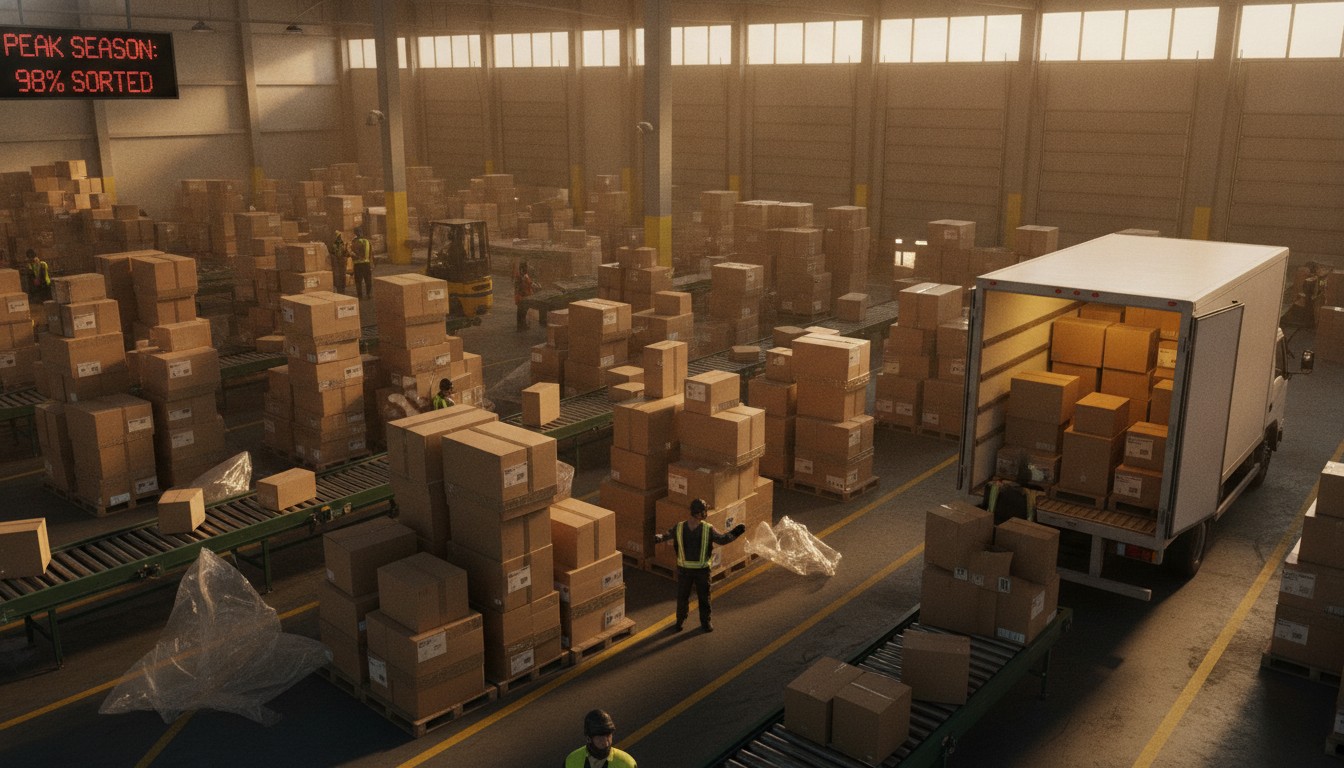
Every fall, the same surprise appears on shipping invoices: peak season surcharges. From October through January, major carriers add temporary fees per package to absorb the surge in volume from Black Friday, Cyber Monday, and the holiday season. In 2026, with record e-commerce volumes expected, these surcharges will return early—and small and medium-sized businesses that don’t prepare for them starting this summer will see their margins shrink at the worst possible time of the year.
Good news: Peak surcharges can be predicted, calculated, and, in many cases, negotiated. Here’s how to approach the 2026 peak season from a position of strength.
What are peak surcharges, and when do they apply?
Peak season surcharges (or «demand surcharges») are temporary fees added to the base rate during periods of high demand. At UPS, FedEx, and Purolator, they generally consist of three components:
- Residential Package Surcharge : approximately 1 $ to 8 $ more per shipment, depending on the service and the volume shipped, typically from late October to mid-January.
- Surcharge for Oversized Packages : Additional handling fees and charges for oversized packages are increased during peak periods, sometimes by 50 $ or more per non-compliant package.
- Volume-Based Surcharge : For large shippers, fees apply when the weekly volume exceeds a certain percentage of the baseline volume.
Carriers typically announce their peak-season rates between August and September. Keep an eye out for these announcements: dates and amounts change every year, and the figures above are for reference only—they vary by carrier, service, and your commercial agreement.
Why 2026 Is Expected to Be More Expensive
Three factors are coming together this year. First, the across-the-board increases in January (from 5 % to 6 % for major carriers) serve as a new basis for calculation: a percentage surcharge is applied to rates that are already higher. Second, ancillary surcharges—fuel, residential, and extended-zone—continued to rise throughout the year, so that the actual cost of a package often increased by 8 % to 12 % compared to 2025. Finally, Canada Post’s weekend delivery service and the growth of e-commerce are concentrating even more volume in the fourth quarter.
Five Steps to Take Right Now
1. Calculate your actual peak-hour cost
Take your typical shipments from last fall and add the announced surcharges: base rate + fuel surcharge + residential surcharge + peak surcharge. It’s this total cost—not the advertised rate—that should guide your selling prices and free shipping thresholds for the holiday season.
2. Anticipate what you can
Restocking, B2B shipments, predictable orders: anything that can be shipped before mid-October avoids peak surcharges. Many small and medium-sized businesses save money simply by shifting 20 % of their volume outside the peak window.
3. Check your packaging dimensions
During peak season, a poorly sized package costs twice as much: a higher volumetric weight charge and a higher surcharge for oversized packages. Review your boxes before October and eliminate any sizes that are close to the dimensional limits.
4. Diversify Your Carriers
Peak surcharges vary from one carrier to another, both in terms of amount and dates. Canada Post is often more lenient on small, lightweight packages, while Purolator or UPS may be more competitive for other types of shipments. A well-managed multi-carrier strategy can reduce the overall bill by 20 % to 30 %.
5. Negotiate—or take advantage of bundled rates
Large shippers negotiate caps or exemptions from peak surcharges. An individual small or medium-sized business has little leverage, but by working through a partner that aggregates the volumes of hundreds of companies, it gains access to terms comparable to those offered to large corporate accounts.
Example: The True Cost of a Package in December
| Position | Off-peak | Top Picks (December) |
|---|---|---|
| Base Rate | 13,20 $ | 13,20 $ |
| Fuel Surcharge | 2,45 $ | 2,45 $ |
| Residential Overload | 5,90 $ | 5,90 $ |
| Peak Overload | 0 $ | 3,25 $ |
| Total | 21,55 $ | 24,80 $ (+15 %) |
These are approximate amounts, which may vary depending on the carrier, the service, and your agreement.
Conclusion: The peak season is made in the summer
The 2026 peak surcharges aren’t inevitable: they’re fees announced in advance that reward shippers who are prepared. Calculated total costs, shipments sent early, optimized packaging, and distributed volumes—every step you take before October directly protects your holiday margins.
At Shipping Store, we help Canadian small and medium-sized businesses and individuals take advantage of negotiated rates with major carriers, including surcharges. Request your free quote at expertshipping.ca and get ready for the 2026 peak season with the best rates.



 French
 English
 Spanish