

Every year, the same scenario plays out at Canadian small and medium-sized businesses: On December 18, a customer calls to ask if their order will arrive on time, and the only possible answer is that it will cost 60 $ for priority shipping. The Holiday 2026 Shipping Deadlines are not just a logistical detail: they determine your profit margin for the entire fourth quarter.
The 2026 season is coming with a new twist. The major carriers’ high-season surcharges take effect at the end of September and run through mid-January 2027, extending the costly window by several weeks compared to previous years. In other words: shipping late no longer costs just the express rate, but the express surcharge.
This guide provides a work schedule, the safety margins to apply depending on the destination, and the steps to follow when a customer places an order after the deadline.
Why the Published Deadlines Aren't Your Actual Deadlines
Carriers are announcing cut-off dates: the last day you can drop off a package for delivery estimated before December 24. These are estimates based on networks operating at normal capacity—but in December, no network operates at normal capacity.
Three factors consistently cause these dates to shift in real life:
- Internal preparation time. From order placement to picking, packing, and label printing, please allow 24 to 48 hours during peak periods, even though same-day shipping is available the rest of the year.
- The last pickup. A label created at 4:45 p.m. when pickup is scheduled for 4:00 p.m. is dated for the following day.
- Terminal congestion. Packages delivered on December 19 and 20 pass through facilities that handle two to three times their usual volume. Service guarantees are also typically suspended during this period.
Work rule: subtract two full business days of any published deadline, and treat the result as your actual internal deadline.
Tentative Schedule for the 2026 Season
The table below provides planning guidelines for delivery before December 24, 2026. Exact dates vary by carrier and depending on your service agreement—please verify them with your carrier before posting them on your website.
| Destination | Economy / Ground Service | Express Service | Margin to be added |
|---|---|---|---|
| Same province | Around December 17–18 | December 22–23 | 1 day |
| Interprovincial (East ↔ West) | Around December 11–12 | December 21–22 | 2 days |
| Remote and Northern Regions | Around December 4–8 | December 17–18 | 3 to 5 days |
| United States | Around December 10–12 | December 19–20 | 2 days (customs) |
| Europe and International | Around the 1sterDecember 5 | December 15–17 | 4 to 7 days |
Two destinations warrant special attention. The remote regions and the Canadian North often depend on a single weekly flight: missing the flight means losing not just a day, but a whole week. And the international shipments add a customs clearance process whose duration is never guaranteed—an incomplete commercial invoice can hold up a package for five business days.
The Cost of Delays: Express vs. Planning
The price difference between standard and priority shipping on the same route generally ranges from one to three times, before surcharges. In December, add peak-season surcharges on top of that, which apply to weight, oversized packages, and residential deliveries.
In practical terms, for a 2-kg package shipped from Montreal to Vancouver, a customer who places an order on December 20 instead of December 11 costs you the standard vs. express shipping difference plus seasonal surcharges. For 200 late orders, this typically amounts to several thousand dollars in lost profit—whether you absorb the cost or pass it on, at the risk of cart abandonment.
The amounts and differences listed here are for reference only and vary depending on the carrier, the service, the zone, and your rate agreement.
Seven Things to Do Before the 1ster December
- Post your deadlines on your website, by region, starting in mid-November. A clear banner reduces customer service inquiries and disputes after the fact.
- Set a date for the express switchover. After that date, remove the budget option from the shopping cart rather than making promises you can't keep.
- Validate your addresses at the source. An address correction in December doesn't just incur fees—it also adds one to three days to transit time.
- Stock up on packaging supplies in November. Damaged boxes and packaging are common in December.
- Confirm Your Daily Pickups for the entire period, including days with reduced hours.
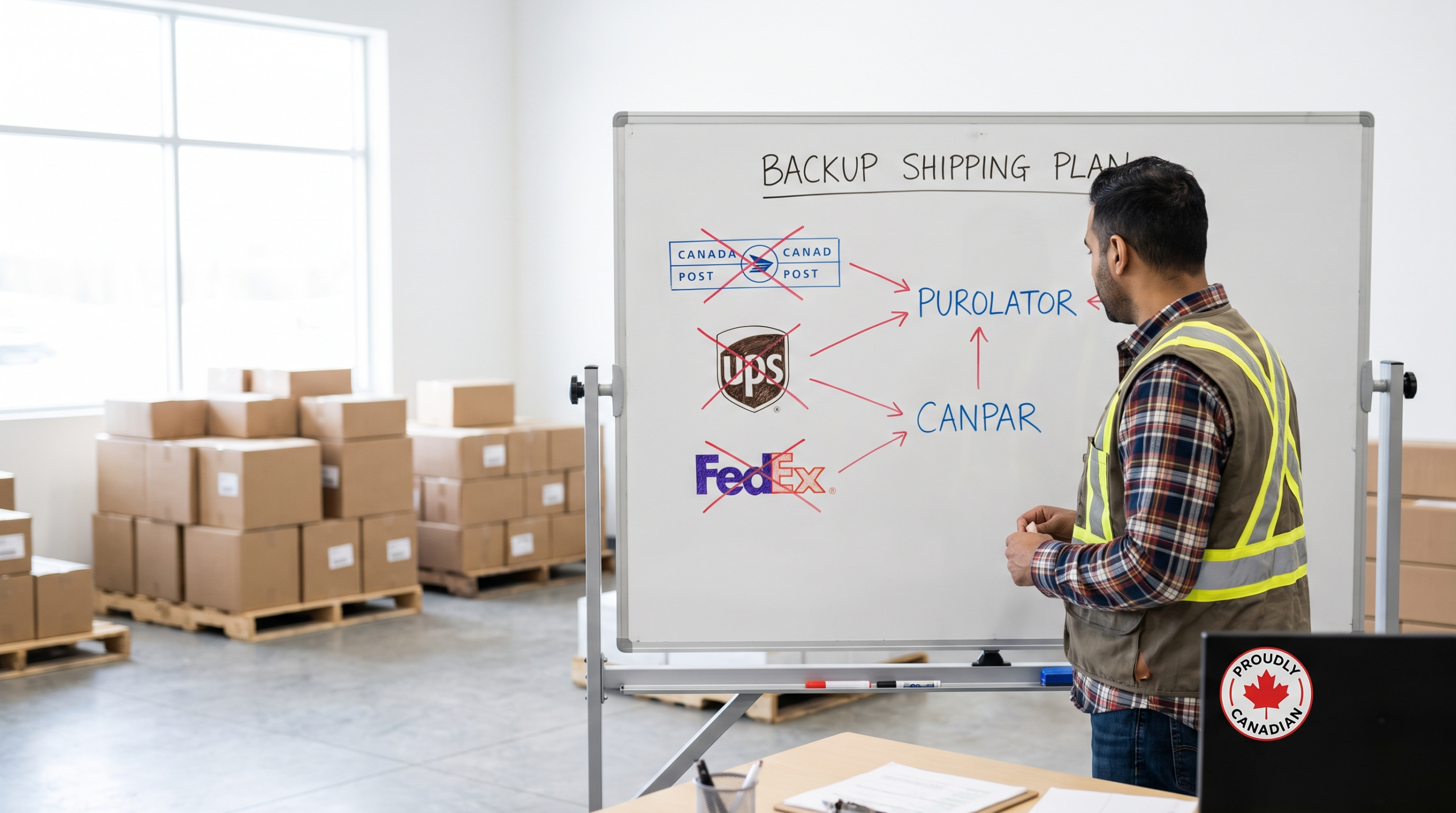
- Plan to use a second carrier. If your primary carrier closes volume sign-ups or experiences a disruption, a backup account that’s already set up can save your season.
- Document your international shipments early. HS codes, accurate descriptions, and actual value: these are what prevent goods from being held at customs.
The customer placed the order too late: what to do
Three options, in order of preference. First, Offer a shared-cost upgrade : The customer pays part of the express fee, and you keep the sale and the relationship. Then, Offer guaranteed delivery after the holidays with a goodwill gesture (discount, free gift)—which is often better received than a broken promise. Finally, Pickup at the store or at a service location, if you have a place to stay locally.
What not to do: Promise a delivery date that the carrier can’t meet. A late package results in a refund, a negative review, and a lost order next year.
Get ready for the season now
The small and medium-sized businesses that get through December without a hitch aren’t the ones that ship the fastest—they’re the ones that finalized their schedules in October, selected their services in advance, and set up an emergency fund. September is the right time to do this work, before peak season surges kick in.
Would you like to compare the services, actual delivery times, and rates of several carriers to plan your 2026 holiday schedule? Get a quote on Expert Shipping and plan for your peak season based on numbers rather than assumptions.


 French
  English
  Spanish