
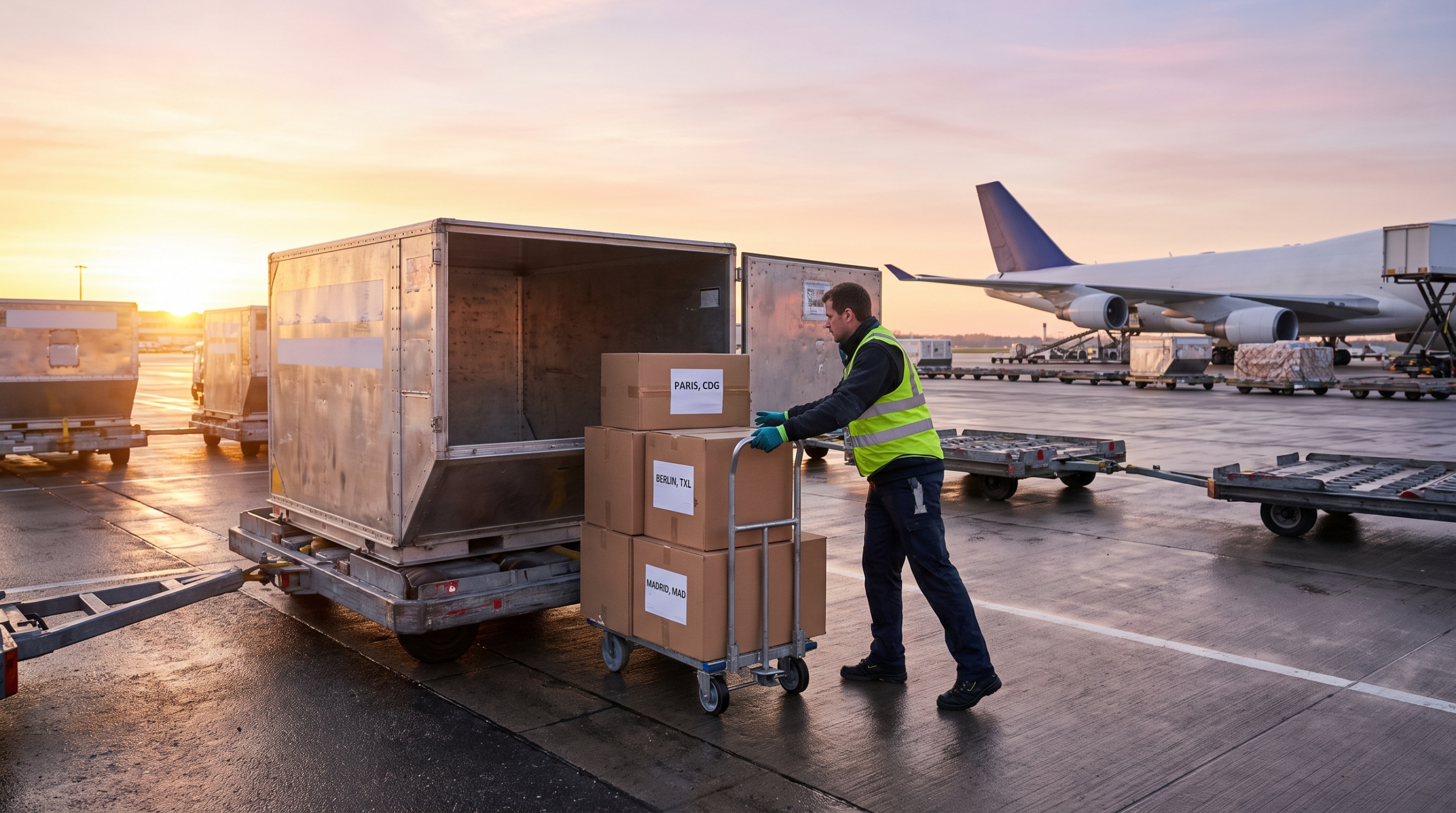
Every year, Spain receives thousands of packages from Canada: orders from online stores, replacement parts sent to customers, personal belongings of a student studying in Barcelona, and gifts for family members. It is an accessible market, well-served and covered by the Comprehensive Economic and Trade Agreement (CETA) between Canada and the European Union.
But since the 1ster In July 2026, European customs regulations changed. The assumption that «since it’s under €150, the recipient doesn’t have to pay anything» no longer applies, and many Canadian small and medium-sized businesses are only finding out about the bill when their Spanish customers receive it.
This guide covers everything you need to know to ship to Spain In 2026: actual transit times by service, estimated costs, import duties, required documents, and pitfalls to avoid. The amounts listed are estimates and may vary depending on the commercial agreement, the service selected, the volumetric weight, and any surcharges in effect at the time of shipment.
How long does it take for a package to be delivered from Canada to Spain?
Spain is connected to Canada by direct flights to Madrid and Barcelona, which makes express delivery services particularly fast. However, the difference between a courier shipment and a surface mail shipment is measured in weeks, not days.
| Local Convenience | Estimated timeframe | Suitable for |
|---|---|---|
| International Express (FedEx, UPS, DHL) | About 2 business days to Madrid or Barcelona | Urgent, high-value shipments |
| International Economy (Economy, Expedited) | 3 to 4 business days | E-commerce, Parts |
| Air Freight | 2 to 5 days | Pallets and Bulk Shipments |
| Canada Post, Air Mail (forwarded to Correos) | 2 to 4 weeks, depending on the region | Small, lightweight packages |
| Canada Post, surface mail service | 4 to 8 weeks | Non-urgent personal belongings |
| Door-to-Door Ocean Freight | 1 to 2 months | Shipments weighing more than 200 kg |
Key takeaway: For shipments weighing more than about 200 kg, ocean freight is generally cheaper than air freight. For lighter shipments, courier services are almost always the best balance between delivery time and cost.
How much does it cost to ship to Spain?
The price depends on the billable weight, which is the greater of the actual weight and the bulk density. A lightweight but bulky box will cost as much as its volume, not its weight.
| Send | Local Convenience | Estimated Cost (CAD) |
|---|---|---|
| 2-kg package | Small package | Starting at approximately 35 $ |
| 5-kg package | Door-to-Door Mail Delivery | Starting at approximately 170 $ |
| Packages weighing 10 to 20 kg | Affordable Email Service | Varies by region and agreement |
| More than 70 kg | Air or Ocean Freight | Upon request |
In addition to these amounts, there are fuel surcharges, remote area surcharges if the recipient lives outside major urban centers, and customs clearance fees charged by the carrier. An SME that regularly ships to Europe would be well advised to have its invoices audited: surcharges often account for more than a quarter of the total amount.
Spanish VAT, customs duties, and the CETA
Three factors determine how much the recipient pays in Spain.
- IVA (Spanish VAT) of 21 %, calculated based on the CIF value (goods + freight + insurance), plus customs duties. This is the largest expense in almost all cases.
- Customs duties. Under the CETA, the vast majority of goods of Canadian origin enter Spain at a 0 % rate, provided that proof of origin can be provided.
- The carrier's processing fee, charged for preparing the customs declaration. These fees are separate from taxes and apply even when no duties are due.
To qualify for the CETA duty-free allowance, you must register a Declaration of Origin directly on the commercial invoice. No separate certificate of origin is required. For shipments exceeding €6,000, the declaration must include the exporter’s Canadian business number. Failure to include this declaration results in the full tariff being applied upon arrival, and making a correction after the fact is always a laborious process.
What Changed on the 1ster July 2026
The European Union has ended the customs duty exemption for shipments valued at less than €150. A transitional arrangement is in effect pending comprehensive customs reform.
- A flat fee of 3 € Applies per tariff subheading, per shipment, for packages up to €150. A package containing two different product categories is therefore charged €6.
- This transitional arrangement is set to end on the 1ster July 2028.
- Since 1er November 2026, product identification information is now required for B2C shipments. A vague description such as «samples» or «gift» is now enough to cause a package to be held.
- A processing fee A fee of approximately €2 per package has been proposed at the European level, but has not yet been adopted.
Here is a concrete example for a package worth €100 that includes two pricing tiers, with a shipping cost of €15:
| Position | Amount |
|---|---|
| Flat fee (2 lines × 3 €) | 6,00 € |
| VAT Tax Base | 121,00 € |
| VAT at 21% 1Q3Q | 25,41 € |
| Total border charges | 31,41 € |
For online purchases of up to €150, the ticket office IOSS allows VAT to be collected at the time of purchase rather than upon delivery. This means customers don’t receive any unexpected invoices, and the package abandonment rate drops significantly.
The Canary Islands, Ceuta, and Melilla: Three Exceptions You Should Know About
Not all Spanish addresses are subject to the same tax regime, and this is a common source of errors.
- Canary Islands (ZIP codes starting with 35 and 38): These areas are outside the EU’s VAT territory. IGIC applies, generally at a rate of 7 %. IOSS is not valid there.
- Ceuta and Melilla (ZIP codes 51 and 52): The IPSI, a local tax, replaces the IVA.
Always check the ZIP code before printing the label: a shipment to the Canary Islands that is treated as a mainland shipment almost always gets held up.
Documents and Packaging: Avoiding Customs Delays
- Commercial Invoice in triplicate, with a detailed description of each item, its quantity, unit price, and country of origin.
- HS Codes at least six digits for each product line.
- CETA Declaration of Origin on the invoice to qualify for the 0 % rate.
- EORI Number the recipient's address for all B2B commercial shipments.
- Double packaging For fragile items: A shipment to Europe changes hands more often than a domestic shipment.
When moving, the residence transfer scheme allows you to import your personal belongings duty-free, provided that you have lived outside the EU for at least twelve consecutive months, have owned and used the items for at least six months, declare them within twelve months, and do not sell them for one year.
Checklist Before Shipping to Spain
- Check the ZIP code (mainland, Canary Islands, Ceuta, or Melilla).
- Calculate the volumetric weight before choosing a box.
- Describe each item in detail and include the HS codes.
- Add the CETA declaration of origin to the commercial invoice.
- Decide who pays the taxes: DDP (you) or DDU (the recipient).
- For B2C transactions up to €150, consider using the IOSS.
- Compare at least two carriers before printing the shipping label.
Ship to Spain Without Any Unpleasant Surprises
Spain remains an easy destination for a Canadian small business, provided that customs clearance is treated as a preparatory step rather than a last-minute formality. A properly prepared commercial invoice, a CETA declaration of origin, and a service option tailored to the customer’s actual timeline are sufficient to eliminate most obstacles.
At Shipping Store, our teams compare rates from major carriers, prepare your customs documents, and pack your shipments bound for Spain and the rest of Europe. Request a quote or stop by one of our service locations to get a quote for your next shipment.
The rates, tax rates, and thresholds listed are for informational purposes only as of the date of publication and may vary depending on the trade agreement, the service selected, and applicable regulations. Please verify the applicable amounts with your carrier or a customs broker before shipping.

 French
 English
 Spanish
