
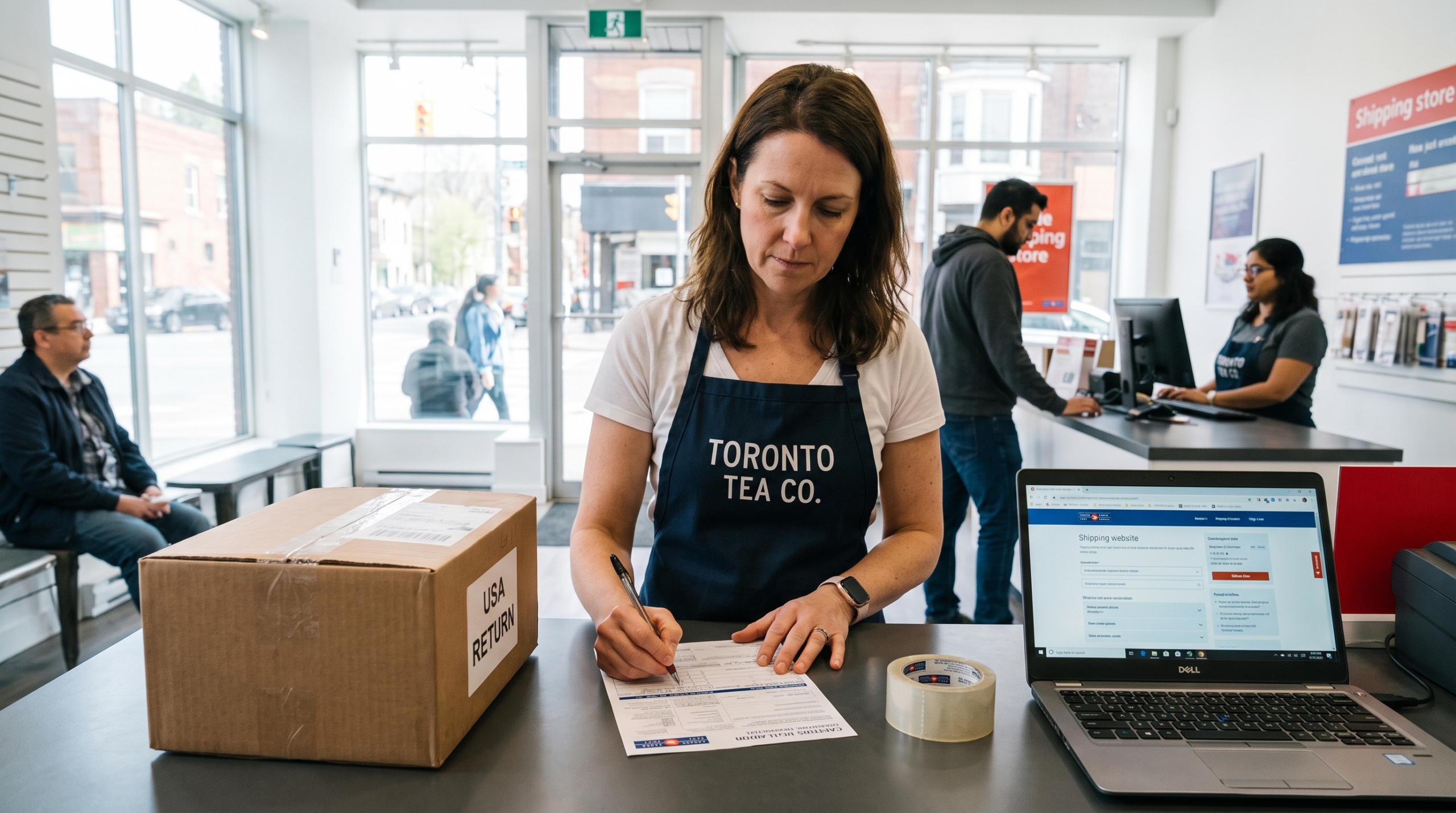
Since the exemption was suspended de minimis For an American company with 800 $ US employees, a routine task has turned into a costly headache: the Return of a package to the United States. Goods that cross the border twice may now be taxed twice if the paperwork is not completed correctly.
The issue affects both the small business that returns a defective shipment to its supplier in Michigan and the individual who returns a pair of boots purchased online. In both cases, the rule is the same: it’s not the value of the package that determines the duty bill—it’s what’s written on the customs declaration.
This guide explains what changed in 2026, how to file a tax return so that it is recognized as such on both sides of the border, and what expenses you can claim.
What has changed: The de minimis rule no longer allows for any depreciation
Prior to August 29, 2025, shipments of less than 800 US $ entered the United States duty-free, without formal entry. That option is no longer available. The interim rule published by CBP in June 2026 codified the suspension into regulation, and the U.S. budget bill makes it a permanent repeal effective January 1er July 2027.
Practical implication: Every package entering the United States—even at 40 $—now goes through a customs entry process and may incur duties, brokerage fees, and processing fees. Returns are no exception to this process. by default. It is only exempt if you report it as a return.
The Two Paths to a Comeback, and Their Respective Pitfalls
People often confuse two very different situations. You need to know which one applies to you before filling out anything.
Case 1: You are shipping goods of U.S. origin back to the United States
This is the classic scenario of returning an online purchase or sending it back to a U.S. supplier. The goods are shipped back to the U.S. U.S. law provides for the treatment of returned U.S. goods, but you must explicitly request it and prove that the goods were not processed or improved abroad.
Case 2: The goods are returned to you in Canada after a stay in the United States
In this case, CBSA tariff items 9813.00.00 and 9814.00.00 apply. These provisions allow for the duty-free admission of Canadian goods, or goods that have already been cleared through customs and subsequently exported, when they are reimported. without having received any added value or improvement abroad. Memorandum D8-2-27 details the conditions, including the GST/HST exemption for eligible goods.
The key phrase is «without added value.» If your item was repaired or modified in the United States, you fall under Memorandum D8-2-26 and pay duties based on the value of the repair, not on the total value of the item. This is a different declaration.
The True Cost of a Poorly Documented Return
The figures below are for illustrative purposes only and vary depending on the carrier, the service, and the negotiated agreement. They are intended to show the order of magnitude of the difference between a documented return and an unscheduled return.
| Cost center | Documented Return | Undocumented return |
|---|---|---|
| U.S. Import Duties | 0 $ (returned U.S. goods) | Applicable HS Code Rate |
| Brokerage/processing fees | 15 $ to 35 $ | 25 $ to 75 $ (formal input allowed) |
| Round-trip transportation | One-time payment | Risk of rejection + return to sender |
| GST/HST upon Return to Canada | Exempt if 9813/9814 qualifies | Taxed again on the full value |
| Typical processing time | 2 to 5 business days | 1 to 3 weeks if selected |
The most expensive scenario isn't the tax—it's when a package is rejected at customs and returned to the sender. In that case, you end up paying for two shipments, neither of which delivered anything.
How to Fill Out a Return Form So It Is Accepted
The customs declaration for a return is different from that for a sale. Here is what must be included in it.
- The nature of the shipment : Clearly write «Returned goods — not a sale» or «Returned goods, no commercial transaction.» Never write «Gift» or «Sample» on a return.
- The original import reference : original invoice number, order number, or receipt number, if you have it. This is the document that links the return to the original receipt.
- The actual value : the value of the item, not 1 $. A symbolic value triggers an almost automatic verification.
- The correct HS code : the same as that of the initial entry. Reclassifying upon return creates an inconsistency that draws attention.
- Country of Origin : the date of manufacture, not the date of shipment. This date determines whether returned U.S. goods are eligible for processing.
- Proof of export On the Canadian side, if you are filing forms 9813/9814: original shipping manifest, proof of payment of duties upon entry into Canada.
Seven Ways to Reduce the Cost of Cross-Border Returns
The cost of a return is primarily determined in advance, before the package is shipped.
- Always keep the original import invoice. Without it, it is very difficult to determine eligibility for return processing. Scan it as soon as you receive it.
- Group the returns. Three separate return shipments result in three entries and three brokerage fees. A consolidated shipment results in only one. For an SME, this is often the quickest way to save money.
- Negotiate a Return Merchandise Authorization (RMA) with your U.S. supplier. An RMA number on the box and on the shipping form significantly speeds up processing and prevents the package from being refused upon delivery.
- Select DDP for high-value returns. By paying the duties in advance, you can prevent the recipient from refusing the package because they are being asked to pay an unexpected amount.
- Consider accepting returns without requiring a return shipment for low-value items. When shipping and brokerage costs exceed the value of the item, a refund without a physical return is less expensive. The threshold is often around 40 $ to 60 $.
- Use the drawback if you import and then re-export in large quantities. Refunds of import duties paid are available, but they require meticulous record-keeping and involve a processing period.
- Please return your items through a professional drop-off location. A label prepared correctly the first time prevents address correction fees and additional handling charges, which are the two most common items on return invoices.
The Most Common Mistakes
Four habits are costly—but easy to correct.
- Report a return as a gift. That is a false statement. It could result in penalties and does not save you any money now that the de minimis rule has ended.
- Undervalue the package. An artificially low value does not reduce your rights to a qualifying refund—which are nil anyway—but it does trigger inspections and caps your compensation in the event of a loss.
- Reuse the original box with the old label still attached. If there are two active barcodes on the same box, the package will be sent to the wrong place.
- Wait until the seller's return period has expired. Customs clearance times increased in 2026. A return form submitted three days before the deadline may arrive after the reimbursement window has closed.
When to Use a Service Center Instead of Handling It Yourself
For an occasional low-value return, the seller’s prepaid shipping label is usually sufficient. For everything else—recurring returns, commercial merchandise, items worth more than a few hundred dollars, repaired parts—documentation becomes the deciding factor, and a mistake can result in additional fees and weeks of delay.
This is where professional assistance is worth the cost: verifying the HS code, drafting the return commercial invoice, choosing between DDP and DDU, and comparing carriers on the relevant route. At Shipping Store, we handle return shipments to the United States for small and medium-sized businesses and individuals across Canada, ensuring that customs documents are completed correctly the first time.
Do you have a return to process? Request a quote and we'll let you know, before shipping, what your package will actually cost once it arrives at its destination.
The rates and fees mentioned in this article are for reference only. They vary depending on the carrier, the service selected, the destination, and the applicable commercial agreement. Customs regulations change rapidly: always verify your specific situation before shipping.

 French
  English
  Spanish