
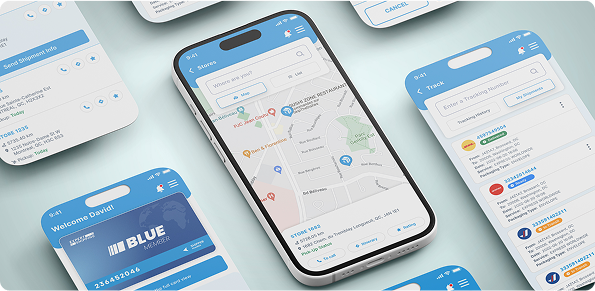
To track a package in Canada, enter the tracking number into the carrier's tracking tool, then compare the last scan to the expected delivery date. For an express service, it’s unusual for a package not to have been scanned again for more than two business days. And if the shipment never reappears, the rule to remember is a timeframe: You have 90 days from the date of shipment to file a claim with Canada Post for a missing domestic package, and six months for a shipment to the United States or internationally. (Canada Post, «Missing Packages» page, accessed October 27, 2026).
Tracking a package isn’t just a convenience. It’s the evidence that determines whether a claim is accepted or rejected, and it’s the only way to distinguish between a package that’s simply delayed and one that’s actually lost. This guide explains how to interpret tracking information, when a lack of updates becomes a cause for concern, and the time limits you shouldn’t exceed.
How does real-time package tracking work?
Tracking relies on three mechanisms, and none of them involves continuous GPS positioning.
- Scans at transit points. At each stage—drop-off, sorting center, loading, delivery vehicle—the barcode is scanned and an event is added to the history. Between scans, the package moves through the system without generating any information.
- Geolocation of the delivery vehicle. On the day of delivery only, some carriers link the package to the vehicle's location and display a time window or a position in the delivery route.
- Distribution via API. The records are sent to third-party platforms and merchants. Canada Post states that it updates the information «as it becomes available,» with no set schedule.
Practical implication: A status that hasn't changed for a few hours does not indicate anything out of the ordinary. It is the duration of the silence, compared to the paid service, that matters.
What does a valid tracking number look like?
Before concluding that a tracking number isn't working, make sure the number matches the carrier's format. A tracking number entered into the wrong tool will never return any results, even when the package is being shipped normally.
| Carrier | Standard Issue Format |
|---|---|
| Canada Post (domestic plan) | 16 digits |
| Canada Post (International) | UPU S10 format: 2 letters, 9 digits, followed by a 2-letter country code (for example, CA) |
| Purolator | 12 characters, including a mix of letters and numbers |
| UPS | Starts with 1Z; 18 characters in total |
| FedEx | 12 or 15 digits, depending on the service |
These formats are common conventions, not hard-and-fast rules: carriers may change their numbering systems without notice. Treat a format match as a hypothesis to be confirmed, not as proof. At Shipping Store, we consolidate numbers from multiple networks onto a single tracking page, which specifically prevents tool-related errors.
The correct tool is the one associated with the carrier that actually has the package at that moment. A 16-digit number is tracked by Canada Post, a 12-character number by Purolator, a number starting with 1Z by UPS, and a 12- or 15-digit number by FedEx. For international shipments, the tracking tool changes along the way: as long as the package hasn’t left Canada, Canada Post publishes the tracking updates; after it is handed over to the postal service in the destination country, that service takes over, and the Canadian tracking tool may remain stuck in transit status for several days without anything unusual happening.
There are two other reasons why a tracking number might show as «not found» even though everything is fine: the shipping label has been created but the package has not yet been handed over to the carrier, so the first scan does not yet exist; or the shipment has just changed networks, in the case of an international shipment that has been taken over by the postal service of the destination country.
How long can you go without a scan before you should start worrying?
There is no single official threshold, but the following guidelines can help you make a decision without calling customer service unnecessarily.
- Express Service: More than two business days without a new scan is abnormal.
- National Economic Service: Up to three business days without a scan is considered normal.
- International shipment held at customs: The status may legitimately remain unchanged for several days.
- Remote areas, weekends, and holidays: They automatically extend the interval between two scans.
Before reporting a problem, always compare it to the service response time you actually paid for, rather than a general estimate. Our comparison of the Delivery Times and Transit Times in Canada in 2026 provides guidelines by carrier and by service.
What delivery times does each service actually promise?
A tracking update only becomes cause for concern when compared to the standard for paid service. Here are the delivery standards published by Canada Post for domestic service, in business days, as of November 3, 2026. The day of posting, weekends, and holidays are not included in the count.
| Scope and Type of Center | Priority | Xpresspost | Express Shipments | Standard Package |
|---|---|---|---|---|
| Local, major urban center | The next day | The next day | 1 to 2 days | 1 to 3 days |
| Regional, major urban center | The next day | The next day | 1 to 4 days | 3 to 6 days |
| National, major metropolitan area | The next day | 2 days | 2 to 8 days | 4 to 10 days |
| National, secondary school | 1 to 3 days | 3 days | 4 to 12 days | 4 to 13 days |
| National, Northern Region, or Remote Area | 5 to 8 days | 5 to 8 days | 6 to 14 days | 7 to 14 days |
Read the last line before calling customer service. A standard package sent to a northern region may legitimately be in transit 14 business days, or nearly three calendar weeks: a six-day period with no updates on this route is normal. The same lack of updates applies to a domestic Xpresspost shipment, for which the standard is 2 business days, it isn't. At Shipping Store, it is precisely this comparison between the service standard and the date of the last scan that we perform before opening a service ticket, because a ticket submitted too early is closed without investigation.
Why does tracking slow down in November and December?
Because delivery guarantees are changing—not just volumes. Canada Post has published a notice titled «Changes to Delivery Guarantees and Surcharges During Peak Season,» which The effective date is November 2, 2026 (Canada Post’s notices page, accessed November 3, 2026). During peak periods, the standards in the table above remain estimates, but the on-time delivery guarantee that usually accompanies them may be modified or suspended, and seasonal surcharges are added to the rates.
Direct impact on tracking information: Between early November and mid-January, a delay of one to two business days beyond the published standard does not entitle you to any recourse, even for express service. This is the most common reason why a tracking number appears to be stuck during this time of year, and the only one that cannot be resolved by contacting the carrier.
What should you do if a package's tracking is stuck?
Follow these steps in this order, because each step produces the part needed for the next one.
- Check the estimated delivery date. As long as the deadline has not passed, no claims will be accepted by Canada Post.
- Reread the latest event, not just the status update. «Notice left,» «incomplete address,» or «held at customs» require action on your part, not an investigation.
- Check the pickup locations. A package marked as delivered but that can't be found is often at the nearest service location or with a neighbor.
- File a service ticket with the carrier. Canada Post then tracks the package «for a few days» before reporting it as missing and provides an estimated resolution date.
- If you are the recipient, please contact the merchant. Only the sender may file a claim and receive compensation.
This last point often comes as a surprise: even with the tracking number in hand, a recipient cannot file a claim on their own. It is the contract of carriage that binds the shipper to the carrier.
What is the deadline for filing a claim for a lost package?
The timeframes below are those published by Canada Post and accessed on October 27, 2026. They consist of two distinct components: a maximum timeframe for filing a claim, and a minimum waiting period after the expected delivery date before the claim is admissible.
| Regulations and Service | Minimum waiting period after the scheduled date | Maximum time limit for filing a claim |
|---|---|---|
| Domestic Regulations (Canada) | The expected delivery date must have passed | 90 days after the shipping date |
| Xpresspost or Trackable Package (U.S. and International) | 1 day | 6 months after the shipping date |
| Registered Mail or International Air Parcel | 30 days | 6 months after the shipping date |
| International Surface Mail | 60 days | 6 months after the shipping date |
The 90-day deadline for domestic shipments is the most common pitfall. A package shipped in early February that was never received can no longer be claimed in May, even if the carrier’s investigation has been dragging on for weeks. File a claim as soon as the package is reported missing, without waiting for the service ticket to be closed.
How much does Canada Post reimburse for a lost package?
Compensation is equal to the lowest of three amounts: the actual value of the item, the insurance amount paid at the time of shipment, or the coverage included in the service used. Many Canada Post services include basic coverage of 100 $ CAD. Postage costs may also be reimbursed even for an uninsured package.
In other words, a 600 $ item shipped without a declared value results in compensation capped at the included coverage, not a full refund. For any shipment whose value exceeds the basic coverage, the declared value must be determined at the time of shipment, never afterward. If the package eventually arrives but is late, a different procedure applies: see our guide on Money-Back Guarantee for a Late Package in Canada. And to reduce the risk of «delivered but not found,» the option to signature upon delivery remains the strongest evidence.
What should you keep in mind when tracking a package?
Effective tracking involves three steps: confirming that the tracking number matches the carrier’s format, comparing the latest scan to the delivery timeframe for the service you paid for, and taking action before 90 days have passed. The first two steps help you avoid unnecessary calls; the third protects your money.
Shipping Store brings together flight tracking for multiple Canadian airlines in a single interface, with email or text alerts for every status change, and a team that opens service tickets on your behalf. Track your packages and ship with Expert Shipping starting with your next shipment.
The delivery times, coverage, and amounts cited are taken from Canada Post’s support pages accessed on October 27, 2026, from Canada Post’s domestic delivery standards and notices page, accessed on November 3, 2026, and from the numbering formats published by the carriers. These figures are for informational purposes only and may vary depending on the commercial agreement, the service selected, and the destination province or state. Always confirm the applicable terms and conditions with the carrier before shipping or filing a claim.



 French
 English
 Spanish