

If your small or medium-sized business imports commercial goods into Canada, 2026 marks the end of a decades-old practice: you can no longer hide behind your customs broker’s business number. The GCRA (Contribution and Revenue Management, known in English as CARM) transfers accounting, financial, and legal responsibility directly to the official importer.
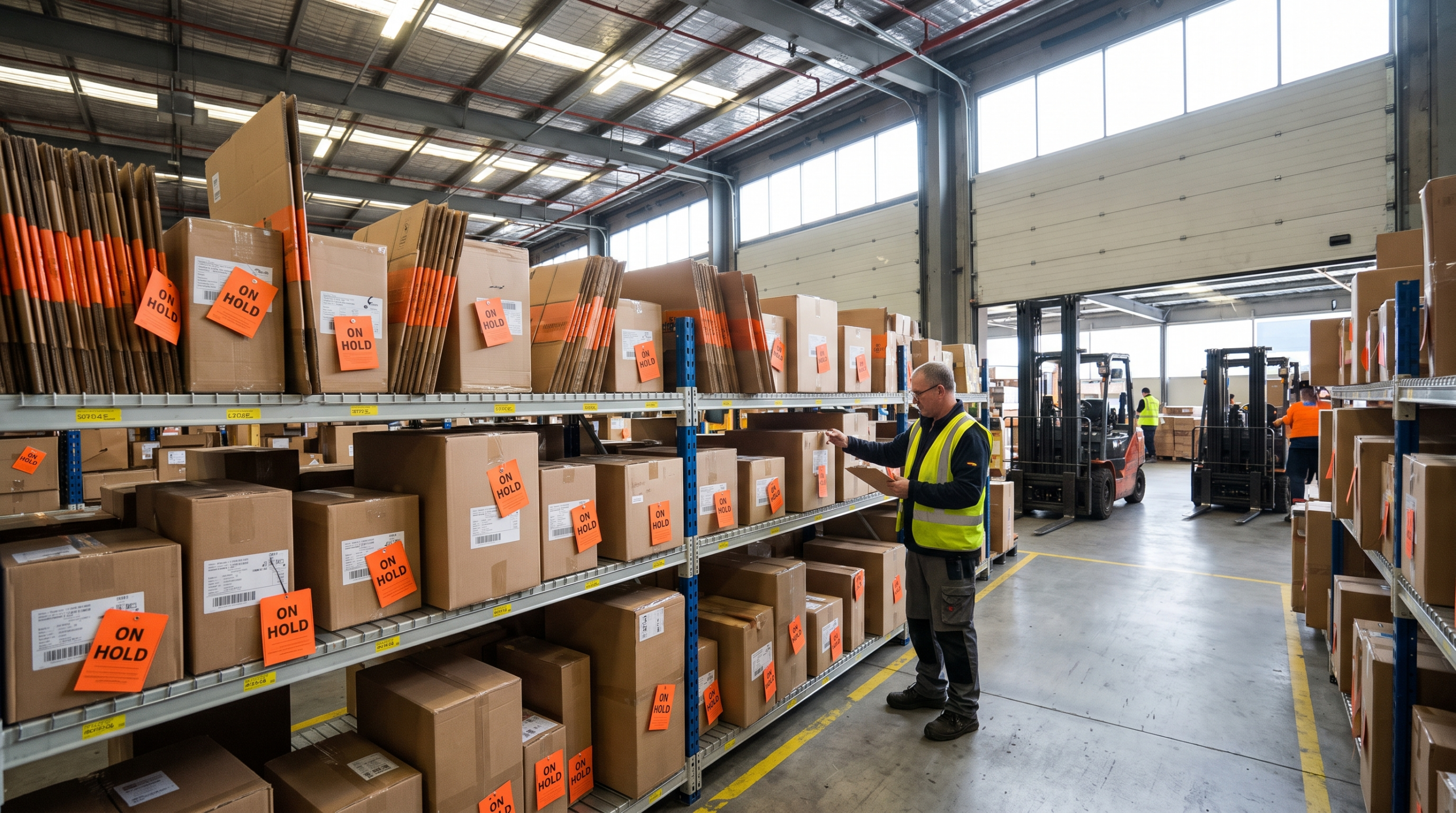
The problem is that many small businesses didn’t realize this until a shipment got stuck at the border. Without an active GCRA account and a financial guarantee in your name, the CBSA will no longer release the goods until payment is made—and late-filing penalties keep piling up while your pallets sit in limbo.
Here's exactly what has changed, how much it costs, and the steps you need to take this week if you haven't already done so.
What the GCRA Changed on January 1er January 2026
The key change is simple to state but has far-reaching consequences: A customs broker’s business number (BN) can no longer be used to declare or clear commercial goods on behalf of an importer. Each importer must now be listed under their own NE with an active import-export account (RM) in the GCRA customer portal.
Three other provisions took effect at the same time:
- The financial guarantee must be in the importer's name. As of May 20, 2025, it can no longer be filed under the broker’s legal entity. Your broker’s warranty no longer covers you.
- Article 17 of the Customs Act has been modified. The entity registered as the importer at the time of the declaration is directly liable for duties and taxes and is responsible for maintaining records, making corrections, and conducting subsequent audits.
- The grace period has ended. The transitional measure that suspended late-payment penalties and interest expired on January 31, 2026. Overdue balances on the account statement (RDC) are now subject to penalties and accrue interest.
MLPD: Financial Guarantees in Practice
The program for Release of Liens Prior to Payment (MLPD, or RPP in English) is what allows you to retrieve your goods at the border before to have paid the duties and taxes. Without the MLPD, every commercial shipment must be paid for in cash before release—an unsustainable drain on cash flow for most small and medium-sized businesses.
To participate, you have two options:
| Option | Amount Required | Typical annual cost | Who is it for? |
|---|---|---|---|
| Bond | 50 % of the highest monthly balance owed to the CBSA over the past 12 months, minimum 25,000 $ | A bonus of a few hundred dollars per 25,000 $ of coverage | Regular importers, predictable volume |
| Cash Deposit | 100 % of the maximum exposure to duties and taxes for one month | No fees, but ties up capital | Very occasional importers or those importing small amounts |
A surety bond is almost always the best choice once your monthly duties and taxes exceed a few thousand dollars: it costs a fraction of what a cash deposit would, and it frees up your working capital. The amounts listed above are for illustrative purposes only and vary depending on the insurer, your history, and your risk profile.
The Cost of Doing Nothing
Inaction is not without consequences. An importer without a compliant GCRA account faces a series of costs that far exceed the price of a bond:
- Late Filing Penalties (LFP). The CBSA imposes graduated penalties when a detailed declaration is not filed by the statutory deadline.
- Carrier storage fees. UPS, FedEx, Purolator, and DHL charge a daily holding fee per shipment as soon as the goods remain in their customs clearance warehouse.
- Return to sender. After a certain number of days without customs clearance, the shipment is sent back—and you pay the shipping costs both ways.
- Interest on the RDC. Since February 2026, unpaid balances have accrued interest, which is compounded daily.
For a single shipment held up for a week, the cost often exceeds the annual cost of a proper financial guarantee.
Your 6-Step GCRA Checklist
- Check your NE and your RM account. You need a 9-digit CRA business number, plus an import-export account (suffix RM0001). Without this account, nothing works.
- Sign up for the GCRA customer portal. The first person to sign up becomes the business account administrator (BAA). Choose someone who will remain with the company.
- Grant access to your broker. The broker is now working in your account, with the permissions you grant them. Grant them access before your next shipment, not after.
- Set up your financial guarantee. Contact a surety bond provider or deposit the funds. Please allow a few business days for the bond to be issued.
- Check your account statement every month. The RDC is published on the 25th of each month; the payment due date is the tenth business day of the following month. Keeping track of the schedule helps you avoid interest charges.
- Keep your records for six years. Commercial invoices, ACEUM certificates of origin, proof of payment, tariff classifications. You—not your broker—will be responsible for any audit.
The side effect: Your tariff classification becomes your problem
Many small and medium-sized businesses discover the GCRA through its cash flow benefits, but the lasting impact lies elsewhere. By becoming the official responsible importer, you also benefit from the accuracy of the HS code stated, from the customs value and the’origin of each item.
In practical terms, this means two things. First, a classification error that went unnoticed for years can now be uncovered during an audit, with retroactive effect for four years. Second—and this is the upside—a classification correct can save you money: Many importers pay duties on goods that would be duty-free under the USMCA if they had the proper certificate of origin.
Take advantage of the GCRA compliance process to have your 20 most frequently used HS codes reviewed. This is often the only compliance effort that pays for itself.
Key Takeaways
The GCRA is not just another administrative formality: it represents a shift in responsibility. The CBSA now deals directly with you, and your broker becomes an agent in your account, and your financial guarantee determines your ability to import goods without tying up cash.
If your account is not yet active, the top priority is the financial guarantee—this is the step that takes the longest and is holding up the release.
At Shipping Store, we assist Canadian small and medium-sized businesses with their cross-border shipments and in selecting carriers. Request a quote to compare your options and reduce your shipping costs for both imports and exports.
The amounts, thresholds, and deadlines listed are for informational purposes only and may vary depending on your agreement, your carrier, your insurer, and applicable regulations. Always verify with the CBSA or your customs broker.



 French
 English
 Spanish