

South Korea is one of the most densely populated e-commerce markets in the world, and Korean shoppers are among the most accustomed to cross-border shopping globally. For a Canadian small business, this is an attractive market: high purchasing power, an ultra-fast delivery network once packages clear customs, and genuine demand for North American products (supplements, outdoor clothing, maple syrup, and specialty items).
But ship to South Korea has two pitfalls that most senders don't realize until it's too late: the $150 duty-free threshold, which isn't the same for everyone, and the personal customs clearance code that your recipient must provide to you before that the package be shipped.
Here's what you need to know in 2026 to avoid packages getting held up in Incheon and unexpected customs bills for your customers.
The $150 threshold: the rule that determines everything
South Korea applies a de minimis threshold of 150 USD on the value of goods intended for personal use. Below this threshold, the package generally goes through the simplified customs clearance process based on a list (목록통관) and is exempt from both customs duties and VAT.
One detail that many Canadian shippers are unaware of: Goods of U.S. origin are subject to a threshold raised to $200 thanks to the Korea–U.S. Free Trade Agreement. This treatment does not automatically apply to a package shipped from Canada: it is the origin of the goods, not the country of shipment, that matters. If your products are manufactured in Canada, the $150 USD threshold applies.
Above the threshold, Korean customs calculates:
- some customs duties vary depending on the HS code (often 8 % for everyday consumer goods, 13 % for certain textiles, and 0 % for several categories); ;
- one 10% VAT % applied to the CIF value (goods + freight + insurance) more rights; ;
- Depending on the product, an excise tax or an additional education tax.
Another important detail: the threshold applies per shipment, not per item. Combining three orders of $70 into a single box pushes the total above the threshold and triggers the full tax.
The PCCC code: without it, your package won't be accepted
For several years now, South Korea has been requiring a personal customs clearance code (Personal Customs Clearance Code, often abbreviated as PCCC) for any shipment intended for a private individual. This code, which the recipient can obtain free of charge from the Korea Customs Service, replaces the national identification number in the customs clearance process.
In practical terms:
- The code must appear on the sales invoice and in the electronic data provided by the carrier; ;
- the the recipient's name and phone number must match exactly those registered with the code; ;
- Without a valid code, the package is held upon arrival until the recipient resolves the issue—which can take several days and result in storage fees.
If you sell online, the best practice is to add a required «PCCC» field at checkout for Korean addresses. For shipments to a business, the Korean business registration number serves this purpose.
Carriers, delivery times, and estimated costs
The table below provides approximate costs for a 2-kg package shipped from Montreal or Toronto to Seoul. The amounts are indicative and vary depending on your agreement, the area, the fuel, and the time of year.
| Option | Typical turnaround time | Estimated cost (2 kg) | Key Takeaways |
|---|---|---|---|
| Canada Post — International Benchmark Package | 6 to 12 business days | 45–70 $ | The most economical option, limited tracking, slower customs clearance |
| Canada Post — Xpresspost International | 4 to 8 business days | 70–100 $ | A good compromise for shipments below the threshold |
| UPS Worldwide Expedited | 3 to 5 business days | 90–140 $ | Customs Data Submitted Electronically |
| FedEx International Priority | 2 to 4 business days | 120–190 $ | The fastest option—brokerage fees included in many cases |
| DHL Express Worldwide | 2 to 4 business days | 120–200 $ | Extensive network in Asia, efficient customs clearance |
In addition to these amounts, there is a fuel surcharge, a possible remote-area surcharge for locations outside major Korean cities, and handling fees if your package exceeds the size limits.
Volumetric weight has a major impact on this destination
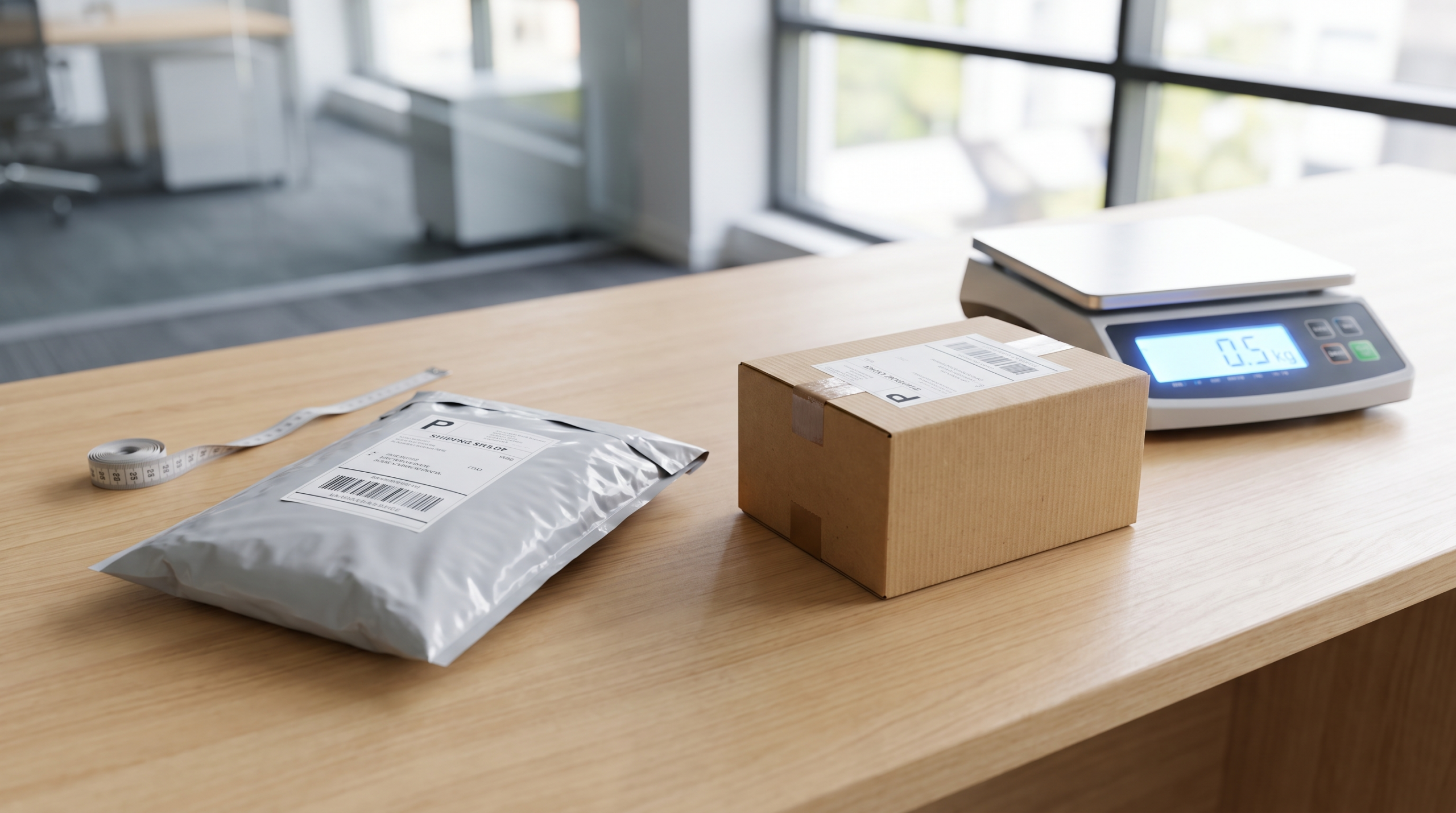
On trans-Pacific routes, air freight capacity is expensive, and carriers charge based on the higher of the actual weight or the volumetric weight. Using the 5,000 divisor standard for international shipping, a box measuring 40 × 30 × 30 cm is charged at 7.2 kg even if it weighs only 2 kg.
For a shipment to Seoul, this difference can amount to an additional 60 $ to 100 $ per package. Downsizing the box by one size, replacing the cardboard box with a padded envelope when the product allows it, and removing unnecessary empty space are the steps that yield the quickest results.
Prohibited Items and Restrictions to Watch Out For
Korean customs enforces strict regulations on several categories that often catch Canadian shippers off guard:
- Supplements and Health Products : Permitted in small quantities for personal use, but subject to quantity limits and, in some cases, approval by the MFDS.
- Cosmetics : Strict limits on the number of units per shipment before customs reclassifies the shipment as a commercial import.
- Food products, meat, dairy products : severely restricted or prohibited, depending on the type.
- Lithium batteries : Subject to TMD/IATA regulations; prohibited from being sent by mail in several configurations.
- Seeds, plants, wood products : mandatory phytosanitary quarantine.
A vague description on the commercial invoice («samples,» «gift,» «goods») is the leading cause of inspections. Describe the product precisely, including its material, quantity, and six-digit HS code.
Five Tips for Paying Less and Getting Faster Delivery
- Keep the cost per shipment under $150 When possible: Splitting two orders into two separate packages is often less expensive than paying duties and VAT on a combined shipment.
- Enter the PCCC code when placing your order, not after shipping.
- Categorize your products correctly : An accurate HS code prevents an agent from applying the highest rate in that category.
- Choose the Right Incoterm : With DDP, you pay the taxes and the customer faces no surprises; with DAP, the customer pays upon delivery, which can lead to packages being refused.
- Always compare carriers Before each shipment: The difference between the lowest and highest prices frequently exceeds 100 $ for this destination.
Conclusion
Shipping to South Korea isn’t complicated, but it’s a market that doesn’t tolerate errors in documentation. A missing PCCC code or an imprecise description costs more in delays and customer frustration than any surcharge.
At Shipping Store, we compare rates from Canada Post, UPS, FedEx, DHL, and Purolator for each international shipment and help you prepare customs documentation that gets approved on the first try. Get a quote for your next shipment to South Korea and see how much you can save per package.
The amounts listed are approximate and vary depending on your service agreement, the service level you choose, the destination, the current fuel surcharge, and the time of year.

 French
  English
  Spanish