
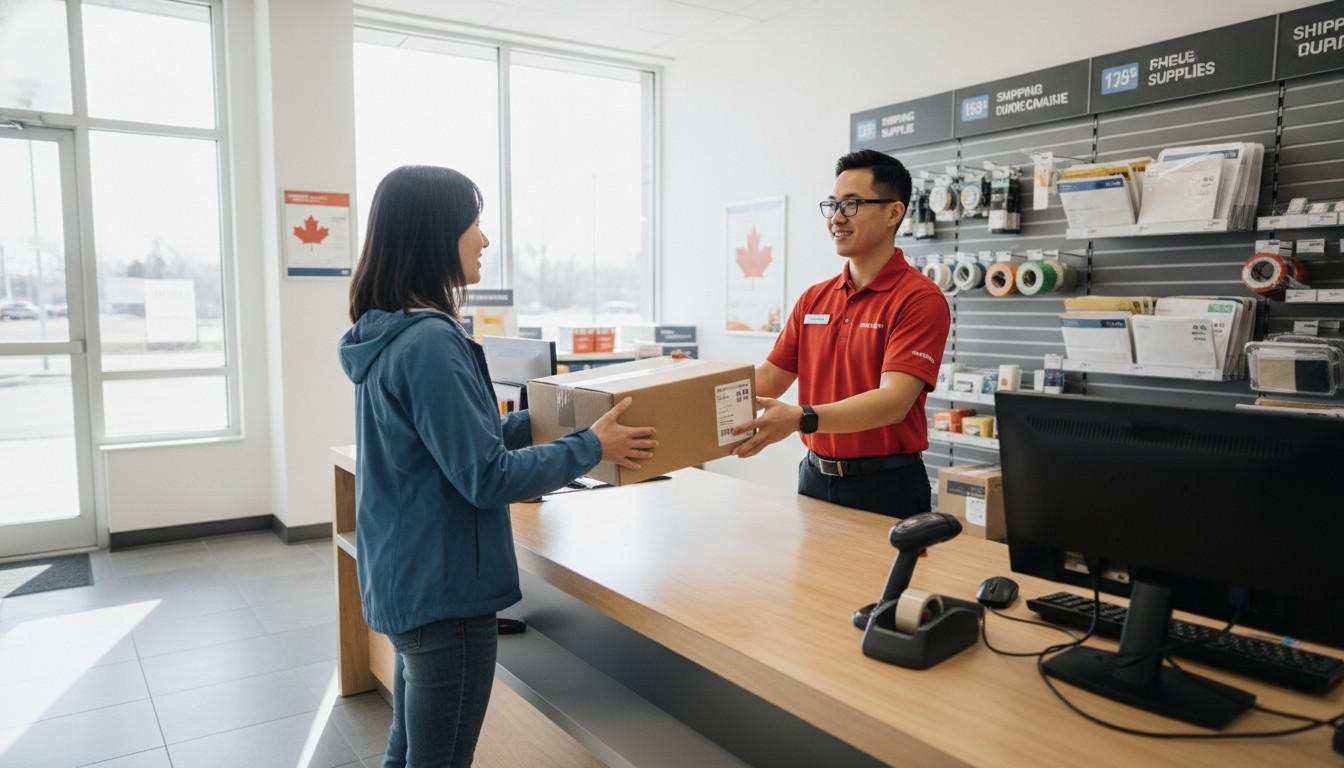
Dropping off a package at a shipping store’s counter is quick and reassuring: an employee weighs the box, prints the label, and gives you a receipt. But this convenience comes at a price. In 2026, Pick up a package at the store often costs 10 to 50 % more than the same shipment prepared using negotiated rates.
For an individual who sends a gift once a year, the difference is negligible. For a Canadian small business that sends 20, 50, or 200 packages a month, it amounts to thousands of dollars lost each year. This article breaks down where this difference comes from and how to reduce it.
Note: The amounts listed are approximate and vary depending on the carrier, the destination, the weight, and, most importantly, your rate agreement.
List Price vs. Negotiated Price: Two Different Worlds
Most shippers are unaware that a single package can have multiple prices. Carriers such as UPS, FedEx, and Purolator publish a retail price (or counter rate), which serves as the posted reference price. This rate—the highest one—generally applies when you walk up to the counter without a business account.
In contrast, the negotiated rate (sometimes called the daily rate) is reserved for customers who commit to a certain volume. Depending on the volume and the agreement, the difference between the two rates can easily reach 30 to 50 %, and even more for certain regions or weight categories. The package is the same; only the shipping channel changes.
Why franchises add a markup
Stores like The UPS Store operate as franchises. Each store pays commercial rent, salaries, insurance, and franchise fees. To remain profitable, it adds a markup to the shipping price. Analyses from 2026 estimate this markup to be between 10 and 50 % compared to a shipment sent directly through the carrier, and in some cases, this threshold is exceeded for small packages.
At big-box stores like Staples or Office Depot, the base UPS rate quoted at the counter is often the same as at a UPS store, but service and handling fees may apply. The result is the same: you pay the retail price, not a volume rate.
The 2026 increases widen the gap
The 2026 pricing environment is putting even more pressure on these margins. UPS implemented an average across-the-board rate increase of 5.9% Q3/Q4 effective December 22, 2025, FedEx implemented an equivalent increase of 5.9% Q3Q4 effective January 5, 2026, and Purolator has implemented an increase of approximately 5.7% Q3Q4 since September 2025.
But the percentage shown doesn't tell the whole story. The new weight limits for special handling and large packages, combined with the’rounding fractions of an inch up When calculating volumetric weight, these surcharges drive up the actual cost by roughly 8 to 12 % for many shippers. On top of an already marked-up counter rate, these surcharges add up, and the bill quickly becomes much higher.
How much does that actually amount to?
Let’s take a typical 2-kg package shipped to a regional area in Canada. The table below illustrates the impact of a counter margin on the monthly costs of an SME (illustrative figures).
| Monthly volume | Negotiated rate (estimated) | Counter rate (+30 %) | Annual additional cost |
|---|---|---|---|
| 20 packages | ≈ 300 $ | ≈ 390 $ | ≈ 1,080 $ |
| 50 packages | ≈ 750 $ | ≈ 975 $ | ≈ 2,700 1Q-4Q |
| 200 packages | ≈ 3,000 $ | ≈ 3,900 $ | ≈ 10,800 $ |
Even with a modest margin of 30 %, an SME that ships 50 packages per month leaves about 2,700 $ on the table each year. At 200 packages, the extra cost exceeds $10,000. That’s the equivalent of an entire budget line item disappearing into the convenience of the counter.
When the counter remains justified
Going to a store isn’t always a bad choice. For a one-time shipment, a bulky package that needs to be packed on-site, a complex international shipment, or when you need immediate assistance, paying the markup can make sense. Convenience has real value when the volume is low.
The math changes as soon as shipments become regular. Once you’re sending a few dozen packages a month, the retail rate is no longer viable: that’s when it’s time to switch to a solution that pools volumes to secure negotiated rates.
How to pay less without sacrificing service
There are several ways to lower costs while still providing support:
- Pooling volumes : A consolidator combines shipments from multiple customers to secure negotiated rates with various carriers.
- Compare in real time : Let UPS, FedEx, Purolator, and Canada Post compete for each package, rather than limiting yourself to a single carrier.
- Mastering the dimensions : Adjust the packaging to avoid excess volumetric weight and undesirable rounding.
- Monitor for overloads : Residential, remote areas, address corrections, and fuel costs can account for a significant portion of the total.
Conclusion
Sending a package from a store is still convenient, but in 2026, that convenience comes at a high price: franchise fees, retail rates, and cumulative surcharges can drive up the bill by 10 to 50 %. For an SME, the difference quickly adds up to thousands of dollars a year.
The good news is that we can maintain local service while still benefiting from negotiated rates. Shipping Store compares carriers and consolidates shipments so that each package is shipped at the best price. Get a quote at expertshipping.ca and compare it to what you pay today at the counter.



 French
 English
 Spanish