
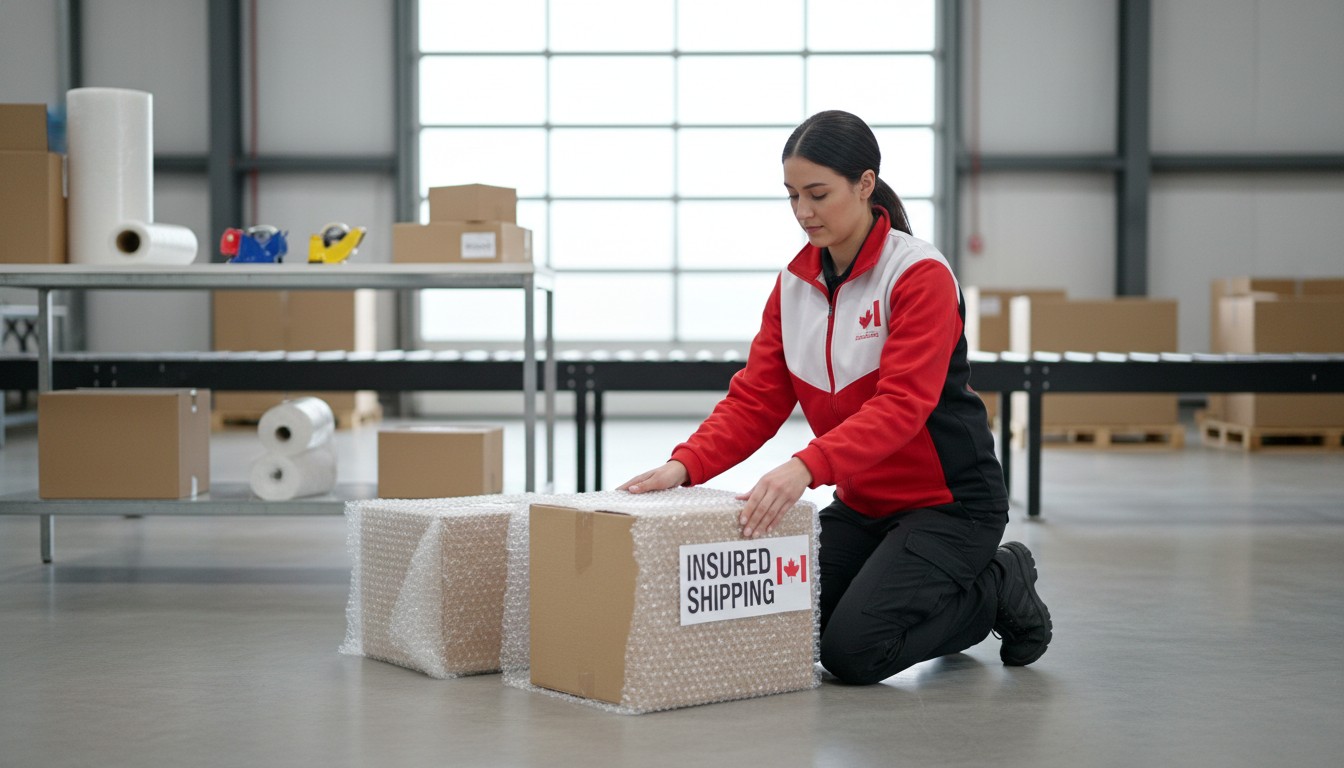
In 2026, shipping a package costs more than ever before. With general rate increases ranging from 5.7% to 5.9% at FedEx, UPS, and Purolator, a proliferation of surcharges, and the end of the de minimis exemption in the United States, every shipment represents a greater value to protect. Yet, the’package insurance remains one of the most misunderstood aspects of shipping for Canadian small businesses and individuals.
What actually happens if your package is lost, stolen, or damaged in transit? How much compensation will you receive, and at what cost? This guide breaks down the coverage included, declared value, and actual costs for major carriers in Canada.
Understanding these mechanisms will help you avoid two costly mistakes: paying for coverage you don’t need, or discovering too late that your goods weren’t insured for their full value.
Basic coverage: what your insurance providers already include
Good news: Most shipments are covered by basic insurance at no extra cost. In Canada, Canada Post, FedEx, UPS, and Purolator generally offer included coverage of up to $100 per package for standard services. With Canada Post’s Expedited Parcel service, for example, each item is automatically covered for up to $100 in declared value during transit.
The catch? This basic coverage is often insufficient. If you ship an electronic device worth 600 $ and it goes missing, the carrier will only reimburse you up to 100 $. Above that threshold, it’s up to you to take the initiative by declaring a higher value.
Declared value and insurance: what's the difference?
The two are often confused, but the distinction is crucial. The declared value represents the maximum amount the carrier will agree to cover, within the limits of its contractual liability. It is a compensation cap, not an actual insurance policy.
The’ad valorem insurance, on the other hand, covers your goods based on their declared actual value and provides compensation on that basis in the event of a claim. Its premium is based on a percentage of the insured value, generally between 0.15% and 3%. Most importantly, it covers situations excluded by the carrier’s basic liability, such as certain cases of force majeure.
Key point to remember: In the event of a claim, the amount paid out will be the lowest of three amounts—the actual value of the item, the insurance amount paid at the time of shipment, or the coverage included with the service used. Declaring the correct value and keeping your proof of purchase is therefore crucial.
How much will supplemental coverage cost in 2026?
Rates vary significantly from one carrier to another. Here are the approximate rates observed in Canada for coverage exceeding 100 $:
| Carrier | Coverage included | Estimated additional cost | Ceiling |
|---|---|---|---|
| FedEx | Up to 100 $ | Approximately 2.1% per 100 units | High (declared value) |
| UPS | Up to 100 $ | Approximately 5 $ per 100 $ | High (declared value) |
| Purolator | Up to 100 $ | Based on the declared value | Up to 5,000 $ |
| Canada Post | Up to 100 $ | Additional Liability Coverage | Up to 5,000 $ |
For a 500-pound package, the difference is striking: approximately 8 pounds of additional protection with FedEx versus nearly 20 pounds with UPS. At scale, these differences have a significant impact on an SME’s logistics budget. These figures are approximate and depend on your commercial agreement, the service selected, and the nature of the goods.
When should you really insure a package?
Insuring all your shipments isn't always cost-effective. The rule of thumb: Compare the cost of insurance to the actual risk of loss and your ability to absorb the loss.
Consider additional protection for goods valued at over 100 $, fragile or hard-to-replace items, international shipments (where longer transit times and handling increase the risks), and high-value, low-volume products. Conversely, for high-volume, low-cost shipments, it is often more economical to self-insure and accept a few minor losses.
Maximize your chances of receiving compensation
Insurance is useless if your claim is denied. To give yourself the best chance of success: pack your items according to the carrier’s guidelines, as packaging deemed inadequate is a common reason for denial. Always keep your invoices, photos of the package, and proof of value. Declare the correct value at the time of shipment. Finally, meet the claim deadlines—which are often short—and document any damage immediately upon receipt.
With the 2026 rate hike looming, every dollar counts. A well-thought-out insurance strategy—protecting what needs to be protected without overpaying for the rest—is an integral part of a well-managed shipment.
Conclusion
Parcel insurance is neither a luxury nor an automatic expense: it’s a trade-off between the value of your goods, the risk involved, and the cost of protection. In 2026, as rates and surcharges rise, understanding the difference between included coverage, declared value, and ad valorem insurance will help you protect your shipments wisely.
Do you ship regularly and want to optimize both your costs and your protection? The experts at’Shipping Store help you choose the right combination of carriers, services, and coverage for your shipments within Canada and internationally. Request a personalized analysis today at expertshipping.ca.

 French
  English
  Spanish