
You're shipping more and more goods, and your bills for package keep rising with every large shipment? In 2026, many Canadian small and medium-sized businesses are paying a high price because they continue to ship by parcel what should be sent via palette. Beyond a certain weight or volume, less-than-truckload (LTL) shipping Less Than Truckload) is significantly more cost-effective and secure than the shipping networks of UPS, FedEx, or Purolator.
The problem: the line between «parcel» and «freight» isn’t always clear. Sending a package that’s too heavy means risking surcharges for handling and oversized items; switching to a pallet too early means paying unnecessary freight charges. This guide helps you choose the right shipping method based on weight, number of boxes, and destination.
Note: The amounts listed below are for reference only and vary depending on the carrier, the negotiated agreement, the distance, and the class of cargo.
Packages and Pallets (LTL): Two Very Different Networks
The network of package (parcel) is designed for individual shipments, handled one at a time, generally under 68 kg (150 lb) by box and without palletizing. It’s fast, automated, and ideal for one or two boxes at a time.
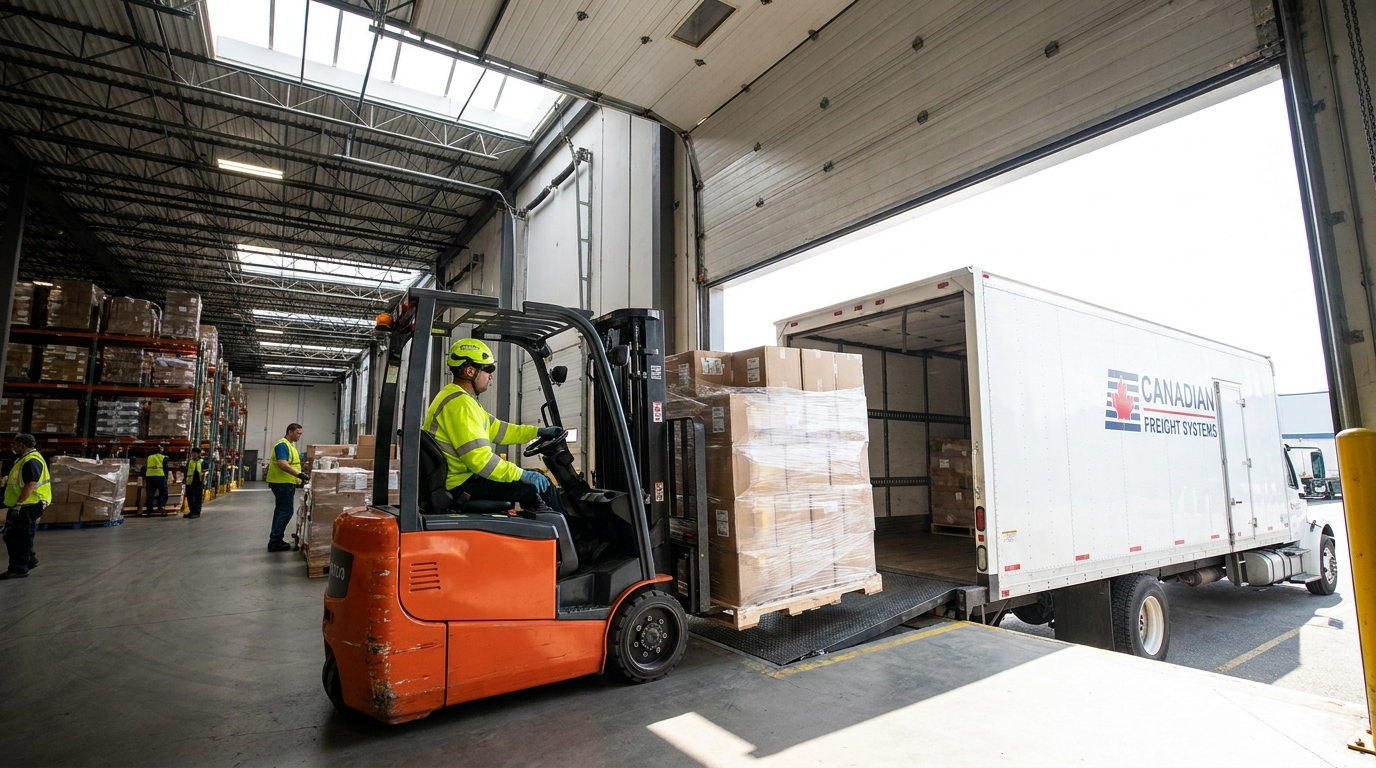
Visit LTL consolidates shipments from multiple shippers into a single truck. Stretch-wrapped pallets are loaded onto the truck using a pallet jack or forklift. LTL is designed for heavy or bulky loads: 1 to 6 pallets, in about 4,500 kg (10,000 lb) in total. Beyond that, full-truckload (FTL) shipping becomes more cost-effective, often starting at 6 to 8 pallets.
When a package costs too much
On the mail network, various charges can quickly add up for bulky shipments:
- Volumetric weight: A light but bulky package is charged based on its volume, which increases the bill by 15 to 20 %.
- Oversized and non-standard cargo: From 19 to 58 $ per package that exceeds the weight, length, or circumference limits.
- Residential Surcharge and Remote Area: 4 to 15 additional $ units per box, depending on the destination.
Multiply those costs by three or four heavy boxes, and you'll often end up paying more than you would for a single pallet.
Comparison: Packages vs. LTL Pallets in 2026
| Criterion | Package (parcel) | Pallet (LTL) |
|---|---|---|
| Ideal Weight | Less than 68 kg per box | 68 kg to 4,500 kg in total |
| Volume | 1 to 2 boxes | 1 to 6 pallets |
| Estimated cost | 15 to 90 $ per box | 150 to 500 $ and more per pallet |
| Material Handling | Per piece | Pallet jack / forklift |
| Deadline | 1 to 5 days | 2 to 7 business days |
| Risk of breakage | Higher (automated sorting) | Lower (per unit load) |
The simple rule: When should you start using a palette?
In practice, think "palette" as soon as you check one of these boxes:
- Your shipment weighs more than 68 kg in total, or if a box weighs more than 32 kg.
- You are shipping three or more boxes to the same address.
- Your packages always trigger oversizes.
- Do you deliver to a a warehouse, a retailer, or a distribution center equipped with a dock.
Conversely, use the package for light, urgent shipments, or those delivered directly to a private address without a loading dock.
How to Properly Prepare a Pallet to Ensure You Pay the Right Price
The LTL rate depends on the cargo class, calculated based on density (weight relative to volume). A poorly assembled pallet that’s too tall pushes up the classification—and thus the price. To avoid unpleasant surprises:
- Stack the items on a standard 48 x 40-inch pallet, making sure they do not extend beyond the edges.
- Securely strap down the load and wrap it with strapping to keep it stable.
- Measure and weigh accurately: an incorrect declaration will result in a re-invoice after verification.
- Aim for good density: compact is better than tall and hollow.
Combine the two methods depending on your shipments
The most effective small and medium-sized businesses don't choose just one approach: they distribute their shipments. Small orders are sent as packages, large orders on pallets, and very large volumes by full truckload. Comparing each shipment at the time of dispatch, rather than relying on standard practice, can significantly reduce annual shipping costs.
Conclusion: The Right Mode at the Right Time
In 2026, knowing when to switch from individual packages to full pallets at the right point is an often-overlooked way to save money. As soon as the weight increases, the number of boxes grows, or surcharges pile up, LTL shipping protects both your budget and your goods.
Are you trying to decide between a package and a pallet for your next shipments? Request a quote from Expert Shipping : We compare the two modes of transportation and the major carriers to offer you the most economical solution in Canada.



 French
 English
 Spanish