
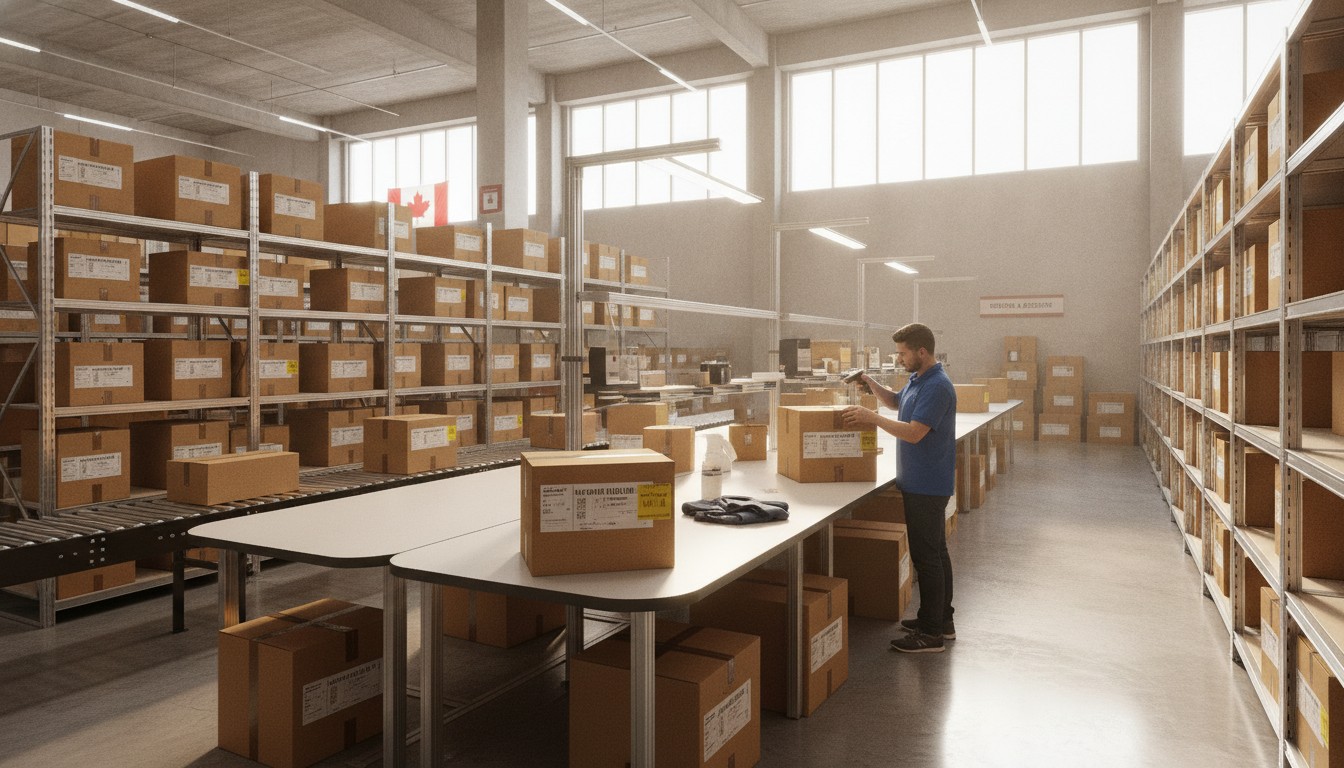
For a Canadian small business that sells online, every package that returns to the warehouse eats into its profit margin. In 2026, the average return rate in Canada ranges from 15% to 30% depending on the product category—it climbs as high as 40% in fashion and drops to around 8% to 15% for electronics. And the average cost of processing a return now stands at 27 $ Revenue per package, taking into account transportation, labor, and restocking.
With rising fuel surcharges—Purolator increased its surcharge from 27.5 cents per pound to 34.5 cents per pound between April and May 2026—and a general increase of 5.9 cents per pound at FedEx and UPS since January, managing reverse logistics is no longer a «hidden» cost. It has become a critical driver of profitability.
This guide outlines practical strategies that Canadian small and medium-sized businesses can implement today to turn their returns from a cost center into a competitive advantage.
Why E-commerce Returns Management Became Strategic in 2026
Canadian e-commerce continues to grow, but the consumer profile is changing. 67% of Canadian shoppers check the return policy before finalizing their purchase, according to the latest industry studies. A vague, costly, or complicated return policy drives customers away—while competitors promise «free returns within 30 days.».
Three factors are increasing the pressure on small and medium-sized enterprises:
- Widespread price increases : Canada Post, Purolator, UPS, and FedEx have all raised their rates by between 5% and 6% in 2026, not to mention the new surcharges on bulky or residential packages.
- Volatile fuel surcharges : Geopolitical tensions in the Strait of Hormuz have pushed oil prices above $100 per barrel, which is having a direct impact on return shipping costs.
- Environmental pressure : 72% of consumers say that the ease of returns strongly influences their purchasing decisions, but they are also increasingly concerned about the carbon footprint of an unnecessary round trip.
For an SME, ignoring reverse logistics in 2026 means leaving up to 10% of its gross margin on the table.
How much does it really cost to return to Canada?
Before optimizing, you need to crunch the numbers. Here is the actual cost structure of a standard return for a Canadian SME in 2026:
| Cost center | Average cost (CAD) | Percentage of the total |
|---|---|---|
| Return shipping (1–2 kg, within Canada) | 12 $ – 16 $ | ~50 % |
| Labor (receiving, inspection, restocking) | 6 $ – 9 $ | ~25 % |
| Repackaging and packaging | 2 $ – 4 $ | ~10 % |
| Impairment (discontinued, marked down, or discarded) | 3 $ – 6 $ | ~15 % |
| Average total | ≈ 27 $ CA | 100 % |
For an average order of 65 units, a single return reduces the order value by 41 units. Multiplied by a return rate of 20%, that comes to 8% of revenue is absorbed by reverse logistics.
Six practical strategies for reducing return costs
1. Clarify and publish the return policy
A concise policy, clearly visible on the product page and the shopping cart page, can reduce return requests due to «unclear expectations» by up to 15%. Clearly state: the timeframe, conditions, fees, refund method, and procedure. Customers who know what to expect are less likely to contact customer service.
2. Negotiate a return rate with a freight broker
Instead of using Canada Post or Purolator’s public rates, go through a shipping broker. An SME that ships between 50 and 500 packages per month can access rates through a broker that are typically reserved for high-volume shippers: typical savings of 20 to 35% both on the way there and on the way back.
3. Adopt a multi-carrier approach
Not all carriers are equally effective when it comes to returns:
- Canada Post remains unbeatable for light packages (< 1 kg) and rural returns, with a very dense network of drop-off points.
- Purolator Express leads the way in urgent B2B returns between major Canadian cities.
- UPS and FedEx offer savings starting at 5 kg and on cross-border shipments between Canada and the United States.
Route each return to the most cost-effective carrier based on weight, destination, and delivery time. That’s exactly what a platform like Expert Shipping automates.
4. Set up a smart prepaid return label
Instead of a generic label printed on the box at the time of shipment (which is often never used), offer a label generated on demand after the return has been authorized. Advantage: You only charge for the label when it’s used, and you collect data on the reason for the return even before the package leaves the customer.
5. Adopt the «green return» strategy»
For low-value items (priced between 15 and 20 $), the cost of returning them often exceeds the value of the product. The solution: refund without requiring a return. The customer keeps the item or donates it, and you save 15 to 25% on reverse logistics costs while improving the customer experience. Many North American retailers have already adopted this practice for 10 to 15% of their product lineup.
6. Use feedback data to address issues at the source
Every return is a warning sign. Colors that don’t look right on screen, sizes that run small, fragile packaging, or ambiguous product descriptions: 30 to 50% of returns can be prevented before they happen. Systematically track the reason for the return, and use this data to improve your product descriptions, photos, and quality control.
Outsource or handle in-house: which should you choose?
For an SME handling more than 200 returns per month, outsourcing to a 3PL provider specializing in reverse logistics becomes a viable option. The 3PL handles receipt, inspection, sorting, restocking, or disposal—and bills per unit processed.
The tipping point is generally around $15,000 to $20,000 in annual return costs. Below that threshold, a well-equipped internal process and a partnership with a freight forwarder remain more cost-effective. Above that threshold, sharing a 3PL’s infrastructure can reduce the unit processing cost by 20 to 40%.
Packaging and product sheets: the best tools for preventing returns
Reducing the volume of returns is almost always less expensive than processing them. Three high-impact actions:
- Clear and numerous photos : A product listing with 6 to 8 photos taken from different angles reduces «does not match the description» returns by 20%.
- Specifications and Materials : Always include weight, actual measurements, and composition. For fashion items, include a dynamic size guide.
- Appropriate packaging : A properly sized package prevents damage during transit (a common cause of returns) and also lowers your initial shipping costs by staying within the optimal dimensional weight category.
Conclusion: Turning Feedback into a Competitive Advantage
By 2026, reverse logistics will no longer be a necessary evil—it will be a key differentiator. Canadian SMEs that track their return costs, intelligently route their packages, and use return data to drive product improvements gain both higher margins and greater customer loyalty.
At Shipping Store, We support Canadian SMEs with negotiated rates through Canada Post, Purolator, UPS, FedEx, and DHL, a multi-carrier shipping platform, and customer service based in Canada. Request your free price comparison and find out how much your business can save on returns starting with the next package.

 French
  English
  Spanish