

You shipped a 4-kg package. Three weeks later, the carrier’s invoice shows 6.5 kg, a higher amount than your quote, and a mysterious line item titled «shipping fee adjustment.» You didn’t change anything about your package. So what happened?
These are the rectification costs : the automatic adjustment that carriers apply when their scanners measure a package differently than what you declared on the shipping label. By 2026, with measuring equipment installed in virtually all Canadian sorting centers, these adjustments are no longer the exception. They have become a recurring line item on the invoices of most small and medium-sized businesses that ship goods.
The good news is that many of these adjustments can be avoided, and others are open to dispute. Here's how to understand them, minimize them, and get what you're entitled to.
What is a shipping cost adjustment?
When you create a shipping label, you declare the weight and dimensions. The rate printed on the label is based entirely on this declaration. But the carrier doesn't take your word for it.
During transit, each package passes through an automated dimension-measuring arch linked to a dynamic scale. In a fraction of a second, the system records the actual weight and the three dimensions. If the discrepancy with your declaration exceeds an internal tolerance, the system generates a correction and applies it to your invoice, typically one to three weeks after delivery.
Two separate amounts are then displayed:
- The price difference : the difference between what you paid and what the package would have cost if the measurements had been correct.
- Audit Fees : a separate administrative penalty, charged in addition to the difference.
It is this second line that most shippers are unaware of. At UPS, according to the 2026 daily rates, correction audit fees apply when the average correction per package exceeds approximately 1 $ over a billing week. The amount charged is the higher of approximately 1.65 $ per corrected package or 12 % of the total corrections for the period. In other words: the more often you make mistakes, the higher the penalty becomes proportionally.
Why Corrections Skyrocketed in 2026
Three changes have occurred this year, and their effects are all reflected on the same bill.
1. Systematic rounding of dimensions
Since January 2026, FedEx and UPS have been rounding up any fractional measurements to the next whole inch before applying the volumetric weight formula. A box measuring 12.1 inches becomes 13 inches. Across all three dimensions, this effect compounds, and the billable weight can jump from 15 to 20 % without the package itself changing.
2. A tighter tolerance
The thresholds that trigger a correction have become more stringent. A deviation of half an inch or a few hundred grams—which used to be tolerated—now triggers a correction line.
3. Higher base rate increases
FedEx, UPS, and Purolator have all implemented across-the-board rate increases ranging from 5.7 % to 5.9 % between September 2025 and January 2026. Each adjustment therefore starts from a higher base, which automatically amplifies the difference in the amount billed.
How Much Does a Correction Really Cost?
Here is a typical example for a package shipped from Montreal to Toronto. The amounts are for illustrative purposes only and vary depending on your agreement, the service you choose, and the destination zone.
| Element | Properly Declared Package | Undervalued package |
|---|---|---|
| Stated Dimensions | 14 × 12 × 10 in | 12 × 10 × 8 in. |
| Dimensions measured during sorting | 14 × 12 × 10 in | 14 × 12 × 10 in |
| Billable volumetric weight | ≈ 12 lb | ≈ 12 lb (corrected) |
| Price paid at the checkout | 18,50 $ | 13,75 $ |
| Adjusted difference | 0 $ | + 4,75 $ |
| Audit Fees | 0 $ | + 1,65 $ |
| Final cost | 18,50 $ | 20,15 $ |
Under-declaring therefore costs about 9 % more than declaring correctly from the start. Based on 200 packages per month with a correction rate of 15 %, this amounts to nearly 2,000 $ per year in costs that could easily be avoided.
The Five Most Common Reasons for Rectification
- Measure the box when it is flat, not when it is full. Once a box is filled and sealed, it bulges. The scanner measures the widest point, not the original box.
- Discard the outer packaging. Tape, corner protectors, stretch film, and handles all count toward the final measurement.
- Reuse a label template. Many small and medium-sized businesses enter a «standard package» into their software and apply it to everything. As soon as the contents vary, the declaration becomes inaccurate.
- Round down. Reporting 11 inches for a box measuring 11.4 inches was tolerated; under rounding rule 2026, this almost always results in a correction.
- Uncalibrated household scale. A bathroom scale or kitchen scale can easily have a margin of error of 200 to 500 grams, which is enough to push the weight into a different price bracket.
How to Challenge an Unjustified Correction
Not all corrections are valid. Scanners can make mistakes, especially with flexible packages, padded envelopes, and irregularly shaped items. Here's what to do.
Step 1: Meet the deadline for filing an objection
Most Canadian carriers allow a limited time—often 30 to 90 days from the billing date—to file a claim. Once this period has passed, the adjustment becomes final. Check your invoices every week, not every quarter.
Step 2: Gather dated evidence
A challenge without evidence is automatically dismissed. Prepare a file containing:
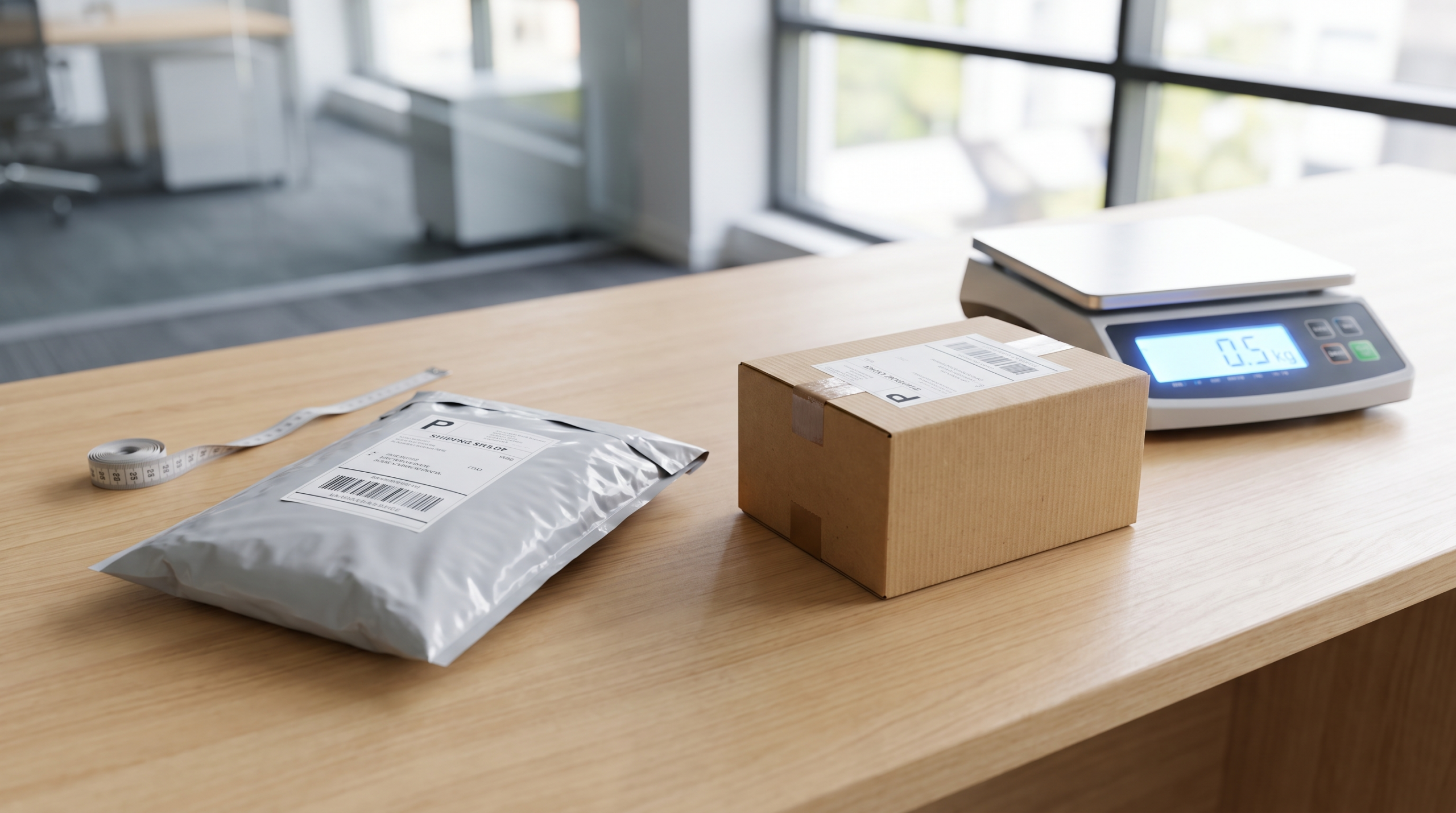
- A photo of the sealed package, next to a measuring tape that is clearly legible along all three axes.
- A screenshot of the scale showing the weight, with the tracking number visible if possible.
- The calibration certificate for your scale, if you have one.
- Specifications for the cardboard used (supplier part number).
Evidence from a certified scale carries much more weight than a simple photo. If you ship more than 50 packages a day, a certified scale is an investment that quickly pays for itself through disputes you win.
Step 3: File a written dispute for each lot
Submit the claim through the carrier’s portal or to your representative, citing the invoice number and tracking number. Group similar cases together: a dispute involving 20 packages of the same size carries significantly more weight than an isolated claim and often paves the way for a tolerance adjustment on your account.
Step 4: Request a refund of the audit fees
A point that is often overlooked: if the adjustment is reversed, the associated audit fees must also be reversed. They do not always disappear automatically. Make this request explicitly in your claim.
Reduce adjustments at the source
Challenging a decision takes time. Prevention is less expensive. Four measures yield quick results:
- Measure after packaging, never before. This is the only measurement that corresponds to what the scanner will see.
- Always round up. A half-inch margin costs a few cents; a correction costs several dollars plus a penalty.
- Standardize your boxes. Three or four fixed sizes, measured precisely once, eliminate the vast majority of discrepancies.
- Review your invoices every week. Filter the «correction» row and track the percentage of packages affected. If the rate exceeds 5 %, there is a process issue—it's not just bad luck.
When to Talk to Your Carrier About This
If your correction rate exceeds 10 % despite rigorous measures, the problem may stem from your equipment or account settings. This is a legitimate bargaining point. A shipper who documents their measurements and provides a track record of successful appeals often secures an adjusted tolerance or a partial waiver of audit fees.
In a nutshell
Correction fees aren’t inevitable. They result from a discrepancy between what you report and what the carrier measures—a discrepancy that you have almost complete control over. Measure after packing, round up, standardize your package sizes, and review your invoices weekly. For any remaining adjustments, document and dispute them: the success rate is much higher than you might think.
Not sure how many corrections are hidden in your invoices? The team at’Shipping Store analyzes your shipments, identifies avoidable corrections, and negotiates rates tailored to your actual sizes. Get an estimate of your shipping costs and stop paying for inches you don't ship.
The amounts listed are for reference only and vary depending on the carrier, the service, the region, and the applicable commercial agreement.
 French
  English
  Spanish